
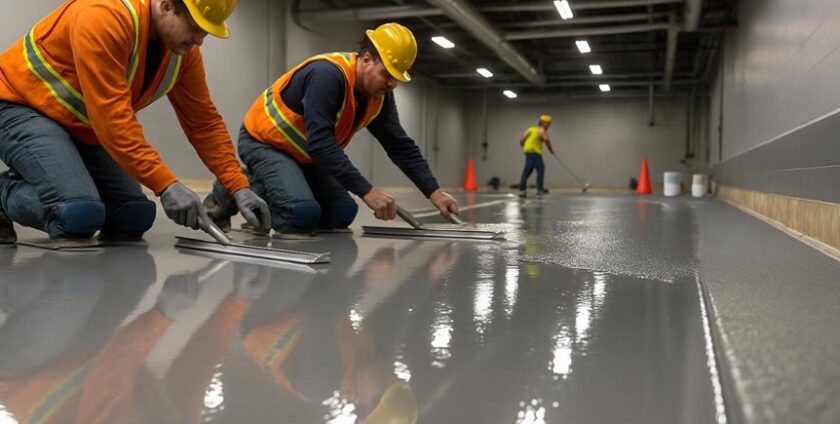
The installation of resinous floors in King of Prussia, PA, requires a systematic approach to guarantee durability and aesthetic appeal. Initial assessments are fundamental, involving precise measurements and surface evaluations. Following this, surface preparation plays an important role in achieving ideal adhesion. Once the groundwork is laid, the process advances to mixing and pouring the resin. Understanding these phases is necessary for anyone considering this flooring option, as each step contributes markedly to the comprehensive outcome.
Understanding Resinous Flooring
Resinous flooring represents a modern solution for both residential and commercial spaces, characterized by its durability and aesthetic appeal.
There are various resinous flooring types, including epoxy, polyurethane, and methacrylate, each offering unique benefits suited for different environments.
The installation techniques for these floors typically involve surface preparation, mixing resin components, and applying the mixture with precision. Proper curing is vital to guarantee a robust finish, while decorative options can enhance visual appeal. Additionally, specialized flooring solutions such as anti-slip safety flooring can greatly improve safety in high-traffic zones.
Understanding these factors is significant for anyone considering resinous flooring, as it influences both performance and longevity in their chosen space.
Benefits of Resinous Floors
Resinous floors offer a range of benefits that make them an appealing choice for various applications.
Their durability and longevity guarantee they withstand heavy foot traffic and wear, while easy maintenance requirements simplify upkeep.
Additionally, the aesthetic versatility of resinous flooring allows for customization to fit diverse design preferences. Furthermore, when combined with mechanical concrete polishing, resinous floors can enhance surface texture and appearance, providing an even more polished look.
Durability and Longevity
When considering flooring options, durability and longevity are paramount factors, especially in high-traffic areas.
Resinous floors, constructed from high-quality resin composition, provide exceptional strength and resistance to wear. This flooring type is engineered to withstand heavy loads, impacts, and chemical spills, making it ideal for commercial and industrial settings.
With proper installation and maintenance, resinous floors can achieve a remarkable floor lifespan, often exceeding 10 to 20 years. Their ability to resist cracking and fading further enhances their appeal, ensuring they remain functional and visually appealing over time. This durability ultimately translates into cost savings and reduced replacement frequency, supporting the use of high-quality flooring solutions that are both attractive and hygienic.
Easy Maintenance Requirements
One of the notable advantages of resinous floors is their remarkably easy maintenance requirements.
These floors are designed to withstand wear and tear, simplifying upkeep for property owners. Cleaning techniques often involve basic sweeping and mopping with mild detergents, making them user-friendly for various environments.
Additionally, routine inspections allow for the early detection of potential issues, ensuring longevity and performance. By maintaining a regular schedule of cleaning and inspections, resinous floors can retain their aesthetic appeal and functionality over time. This ease of maintenance considerably contributes to their popularity in both residential and commercial settings, particularly in comprehensive flooring solutions that cater to diverse client needs.
Aesthetic Versatility Options
While many flooring options are limited in design, resinous floors offer a remarkable range of aesthetic versatility that can cater to diverse tastes and preferences.
Homeowners and businesses alike can select from a wide array of color options, allowing for personalized and vibrant spaces. Additionally, various design patterns, such as flake, metallic, or solid finishes, can enhance the visual appeal and create unique environments.
This adaptability not only complements different architectural styles but also allows for creative expression. The result is a flooring solution that is both functional and visually striking, making resinous floors an appealing choice for many. Moreover, the polished concrete look achieved with resinous flooring systems provides an additional layer of sophistication to any space.
Assessing Your Space
Evaluating the space for resinous flooring installation involves several critical steps.
Accurate measurements must be taken to guarantee proper fit, while assessing the surface condition is essential for adhesion and durability.
Additionally, understanding the intended purpose and functionality of the area will guide material selection and design choices. Furthermore, consulting maintenance and cleaning recommendations will ensure that the selected flooring system remains functional and aesthetically pleasing over time.
Space Measurement Requirements
Accurate space measurement is essential when preparing for the installation of resinous floors in King of Prussia, PA. Properly evaluating space dimensions guarantees that the flooring material will fit seamlessly within the designated area.
Key layout considerations include accounting for any fixtures, furniture, or architectural features that may impact the floor’s design and functionality. It is advisable to create a detailed floor plan that outlines these elements to facilitate a smooth installation process.
Surface Condition Evaluation
Before proceeding with the installation of resinous floors, it is essential to evaluate the surface condition of the space. This evaluation employs various surface analysis methods to determine the substrate’s integrity, including visual inspections and moisture testing.
Condition evaluation techniques also focus on identifying cracks, contaminants, and uneven surfaces that may affect adhesion and longevity. Accurate evaluation helps in selecting the appropriate preparation methods, ensuring a durable and effective flooring solution. Additionally, assessing the surface for moisture vapor transmission rate (MVTR) is crucial to prevent potential issues related to water ingress.
Purpose and Functionality Assessment
Understanding the purpose and functionality of a space is essential when selecting resinous flooring, as these factors directly influence both design choices and installation techniques.
A thorough functionality evaluation helps identify the specific needs of the area, whether it be for industrial, commercial, or residential use.
Design considerations such as aesthetics, durability, and maintenance requirements must be aligned with the intended use of the space.
Additionally, factors like foot traffic, exposure to chemicals, and moisture levels should be assessed to guarantee the chosen flooring solution meets performance expectations.
This comprehensive approach guarantees a successful resinous flooring installation tailored to the environment. Furthermore, incorporating customizable functional specifications ensures that the resinous flooring can be adapted for various applications and user needs.
Choosing the Right Resin
When selecting the right resin for flooring, it is essential to take into account factors such as the intended use, environmental conditions, and aesthetic preferences.
Different resin types, such as epoxy, polyurethane, and methyl methacrylate, offer varied benefits suited to specific applications. The selection criteria should include durability, chemical resistance, and ease of maintenance, ensuring the chosen resin meets the demands of the space.
Additionally, considerations like slip resistance and color options can enhance both functionality and visual appeal. By carefully evaluating these aspects, one can make an informed decision that aligns with both practical needs and design goals. Notably, epoxy resins provide high thermal and chemical resistance, making them an excellent choice for many flooring applications.
Surface Preparation Steps
Selecting the right resin is only the beginning of the resinous floor installation process; surface preparation is a vital step that directly influences the final outcome.
Effective surface preparation techniques involve thorough cleaning to eliminate dust, grease, and other contaminants that could lead to surface contamination issues. This may include mechanical grinding or shot blasting to achieve the desired texture and profile.
Ensuring a clean, dry, and properly prepped surface is essential for ideal adhesion and durability of the resinous flooring. Skipping or inadequately performing this significant step can compromise the integrity and longevity of the finished floor. Additionally, following safety measures to prevent injuries during the surface preparation process is crucial to protect all workers on site.
Repairing and Leveling the Subfloor
A properly repaired and leveled subfloor is vital for the success of resinous floor installations in King of Prussia, PA.
Before installation, thorough subfloor repair is necessary to address any cracks, voids, or damages that could compromise the integrity of the floor. This process often involves patching or replacing damaged sections and guaranteeing that the surface is clean and dry.
Additionally, floor leveling is essential to create a uniform surface, which helps prevent issues such as bubbling or cracking in the resinous material. Proper attention to these steps guarantees durability and longevity for the finished flooring. Furthermore, understanding moisture management principles is crucial to ensure that the subfloor remains stable and free from moisture-related problems over time.
Applying the Primer
Applying a primer is a critical step in the resinous flooring installation process, ensuring ideal adhesion and longevity.
Various types of primers are available, each designed to meet specific surface conditions and environmental factors.
Understanding the appropriate application techniques is essential for achieving a uniform and effective primer coat.
Surface Preparation Importance
Successful installation of resinous floors hinges on meticulous surface preparation, particularly the application of a primer.
Effective surface preparation techniques are essential, as they guarantee the substrate is clean, smooth, and ready to bond with the resin. This includes thorough surface contaminants removal, such as dust, oils, and previous coatings, which can compromise adhesion and lead to future failures.
Properly preparing the surface not only enhances the longevity of the flooring but also contributes to a flawless finish. By prioritizing these steps, installers can achieve ideal results, guaranteeing that the resinous flooring performs as intended in King of Prussia, PA. Additionally, regular risk assessments can help identify potential hazards during the installation process, ensuring a safer work environment.
Primer Types Available
Various types of primers are available for resinous flooring applications, each designed to cater to specific substrates and environmental conditions.
Epoxy primers are commonly utilized for their strong adhesion properties, making them suitable for concrete and metal surfaces. They create a robust bond and enhance the durability of the flooring system.
Conversely, polyurethane primers offer flexibility and are ideal for environments exposed to moisture or temperature fluctuations. Their resistance to chemicals further extends the lifespan of the floor.
Selecting the appropriate primer type is essential for ensuring peak performance and longevity of resinous flooring installations. Additionally, understanding the different types of tile materials can help inform choices in flooring systems.
Application Techniques Explained
Properly applying the primer is essential for achieving ideal adhesion and performance of resinous flooring systems.
The application process requires careful attention to detail to address potential application challenges such as surface irregularities and environmental conditions. It is vital to confirm that the substrate is clean and dry before primer application.
Timing plays a significant role; primers must be applied within specific windows to guarantee peak bonding with subsequent layers.
Utilizing appropriate tools, such as rollers or squeegees, can enhance the primer’s uniformity and effectiveness.
Ultimately, a well-executed primer application lays the foundation for a durable resinous floor. Additionally, self-leveling polished overlays provide a seamless solution for uneven surfaces, enhancing both aesthetics and functionality.
Mixing the Resin
Mixing the resin is a critical step in achieving a durable and aesthetically pleasing floor. This process requires careful consideration of resin types, as each has unique properties that influence the final outcome.
Proper mixing techniques are essential to guarantee an even consistency and ideal performance. Typically, a mechanical mixer is used to combine the resin and hardener thoroughly, minimizing air bubbles that can compromise the floor’s integrity.
The mixing process should adhere to the manufacturer’s specifications regarding ratios and time, as precise measurements directly impact adhesion and longevity.
Ultimately, effective mixing sets the foundation for a successful resinous flooring installation.
Pouring and Spreading the Resin
Pouring and spreading the resin marks a pivotal phase in the installation of resinous floors, directly influencing the final appearance and durability.
Various resin types, such as epoxy and polyurethane, may be selected based on the desired properties and application environment.
Employing precise pouring techniques is crucial; installers often utilize a calibrated mixing bucket and a notched trowel to guarantee even distribution.
The resin must be poured in a continuous manner to prevent seams and inconsistencies.
As the resin is spread, care is taken to eliminate air bubbles, which can compromise the floor’s integrity and aesthetic appeal, assuring a flawless finish. Additionally, understanding the subfloor structure is essential for optimal adhesion and performance of the resinous flooring.
Adding Decorative Elements
Incorporating decorative elements into resinous floors can greatly improve their aesthetic appeal and create a unique atmosphere in any space. The integration of these features allows for customization that reflects personal style and functionality.
Key components to ponder include:
- Decorative Textures: Adding varied textures can create visual interest and depth.
- Color Blends: Mixing different colors can produce stunning effects and harmonize with surrounding decor.
- Inlays and Patterns: Incorporating unique designs or logos can personalize the flooring further.
These decorative enhancements not only boost the overall design but also contribute to the durability and maintenance of resinous floors. Additionally, utilizing decorative tile mosaics can elevate the flooring’s visual appeal while ensuring a cohesive design throughout the space.
Curing Process
After enhancing the aesthetic appeal of resinous floors with decorative elements, attention must shift to the curing process, which is vital for achieving a durable and functional surface.
The curing time varies based on the specific resin used and environmental conditions, typically ranging from 24 to 72 hours. Maintaining the appropriate curing temperature is important, as cooler temperatures can extend the curing time and affect the final strength of the floor.
Proper monitoring during this phase guarantees that the resin sets correctly, leading to a resilient surface that can withstand daily wear and tear while preserving its visual appeal.
Maintenance Tips for Resinous Floors
Proper maintenance of resinous floors is essential to guarantee their longevity and aesthetic appeal.
Implementing effective cleaning techniques and utilizing protective coatings can greatly enhance floor durability.
Consider the following maintenance tips:
- Regular Cleaning: Use a soft broom or vacuum to remove debris, followed by a damp mop with a pH-neutral cleaner.
- Avoid Harsh Chemicals: Steer clear of abrasive cleaners that can damage the surface; opt for products specifically designed for resinous floors.
- Reapply Protective Coatings: Periodically apply a protective coating to shield against wear and tear, ensuring the floor remains vibrant and intact. Additionally, understanding the safety climate in your workspace can further protect the floor from damage caused by heavy equipment or foot traffic.
Frequently Asked Questions
How Long Does the Entire Installation Process Typically Take?
The installation timeline typically spans several days to weeks, depending on project phases such as surface preparation, material application, and curing. Each phase is essential for ensuring a durable and aesthetically pleasing resinous floor.
Can I Walk on the Floor During the Curing Process?
During the curing timeline, walking restrictions are typically enforced to guarantee proper adhesion and finish. Walking on the floor before it fully cures can compromise durability, leading to potential damage and requiring additional repairs.
What Is the Expected Lifespan of Resinous Floors?
Resinous floors typically last 10 to 20 years, depending on durability factors such as foot traffic and environmental conditions. Regular maintenance tips, including cleaning and prompt repairs, can greatly extend their lifespan and appearance.
Are Resinous Floors Safe for Pets?
Resinous floors are generally safe for pets, as they are made from non-toxic materials. Nevertheless, ensuring proper installation and maintenance is essential for minimizing hazards, providing a stable and comfortable environment for both pets and owners.
What Warranty Is Typically Offered on Resinous Flooring?
Typically, resinous flooring comes with warranty coverage ranging from five to ten years, often including an installation guarantee. This assurance protects against defects and improper installation, providing peace of mind for homeowners and businesses alike.
Conclusion
To summarize, the installation of resinous floors in King of Prussia, PA, is a meticulous process that encompasses careful assessment, surface preparation, and precise application techniques. By understanding the benefits and intricacies of resinous flooring, property owners can make informed decisions that enhance both aesthetics and functionality. With proper maintenance, these floors can offer long-lasting durability and beauty, making them a valuable investment for various spaces.
- By: Francis Burnet
- Tags: installation process, King of Prussia, resinous flooring
- Category: Epoxy Flooring, Uncategorized
- 0 comment