
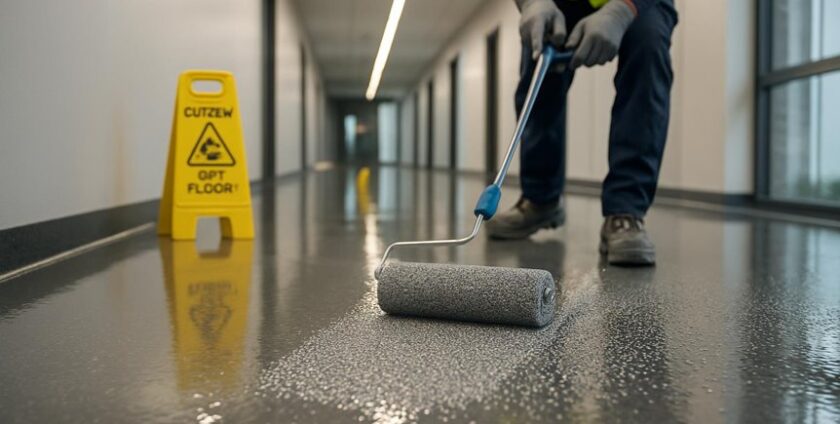
Slip hazards in commercial spaces pose significant risks to both employees and visitors. Floor coatings play an essential role in mitigating these dangers by enhancing surface traction and providing a protective barrier against moisture. Different types of coatings can be employed to improve grip, particularly in high-traffic areas. Understanding the mechanics behind these coatings is vital for achieving ideal safety outcomes in various environments. The following sections will explore the specifics of this important safety measure.
Understanding Slip Hazards in Commercial Spaces
While many commercial spaces prioritize aesthetics and functionality, understanding slip hazards is essential for ensuring safety.
Identifying potential slip hazards involves employing effective hazard identification techniques, such as routine inspections and risk assessments. These methods help pinpoint areas prone to slips, such as wet floors, uneven surfaces, or inadequate lighting.
Implementing comprehensive slip prevention strategies, including using appropriate floor coatings and maintaining surfaces, can greatly reduce risks. Regular risk assessments can help ensure that all potential hazards are identified and mitigated effectively.
Staff training on recognizing hazards and promoting safe practices further enhances safety.
The Importance of Floor Safety
Floor safety serves an essential function in maintaining a secure environment within commercial spaces, as even minor slip and fall incidents can lead to significant injuries and liabilities.
Ensuring proper floor safety measures reduces the risk of workplace accidents, protecting employees and visitors alike. Implementing effective safety protocols, such as regular maintenance and hazard assessments, can mitigate risks associated with slippery surfaces.
Moreover, investing in high-quality floor coatings enhances traction and visibility, additionally contributing to a safer environment. Resinous poured commercial and industrial flooring solutions, such as those offered by Sherwin-Williams, are designed to provide exceptional durability and hygiene, making them an excellent choice for safety-conscious businesses.
Ultimately, prioritizing floor safety not only promotes well-being but also fosters a culture of accountability and care in commercial settings.
How Floor Coatings Work
Understanding how floor coatings function is essential for their effective application in enhancing safety.
Floor coatings utilize advanced coating technology that modifies the surface chemistry of flooring materials, increasing their slip resistance. By creating a textured surface or incorporating anti-slip additives, these coatings improve traction under various conditions.
The interaction between the coating and the floor surface alters the friction levels, making it less likely for individuals to slip. Additionally, many coatings provide a protective barrier against moisture and contaminants, further minimizing hazards.
Ultimately, the right floor coating can considerably contribute to safer commercial environments, especially when utilizing anti-slip safety flooring designed for wet areas.
Types of Floor Coatings for Slip Resistance
Selecting the right type of floor coating is essential for enhancing slip resistance in various environments. Different coatings offer unique properties that improve safety.
- Epoxy Coatings: Durable and customizable, often featuring textured finishes. Epoxy coatings are known for their high thermal stability, making them suitable for both indoor and outdoor applications.
- Polyurethane Coatings: Flexible and resistant to chemicals, they can incorporate anti slip additives for added safety.
- Vinyl Flooring: Often includes textured finishes and is easy to maintain.
- Acrylic Coatings: Suitable for outdoor areas, they can be enhanced with anti slip additives to combat wet conditions.
Choosing the appropriate floor coating considerably reduces slip hazards, promoting a safer commercial space.
Benefits of Epoxy Floor Coatings
Epoxy floor coatings offer significant benefits, particularly in enhancing traction properties, which can greatly reduce slip hazards in various environments.
Additionally, their easy maintenance requirements make them a practical choice for facilities seeking durability and safety.
These attributes contribute to the comprehensive effectiveness of epoxy coatings in promoting a safer working and living space. Moreover, specialized chemical resistance formulations ensure that these floors can withstand automotive fluids and other harsh substances commonly found in commercial settings.
Enhanced Traction Properties
A critical consideration in flooring solutions is the enhanced traction properties provided by epoxy coatings. These coatings incorporate traction enhancing materials, which greatly improve slip resistance in commercial environments.
The surface roughness effects of epoxy contribute to a safer walking surface, reducing the likelihood of accidents.
- Increased grip in high-traffic areas
- Customizable texture options to suit specific needs
- Effective in both wet and dry conditions
- Long-lasting durability against wear and tear
In addition, these coatings can be tailored to meet specific safety standards for various commercial applications, ensuring optimal performance in any environment.
Easy Maintenance Requirements
Maintaining a clean and functional surface is essential for any flooring solution, and epoxy floor coatings excel in this regard.
These coatings require minimal upkeep, making them ideal for commercial spaces. Simple cleaning techniques, such as mopping with mild detergents, effectively remove dirt and spills without compromising the surface. This ease of maintenance contributes to the floor’s longevity, as regular care prevents wear and damage.
Additionally, the seamless surface of epoxy coatings reduces the buildup of dirt and grime, further simplifying cleaning efforts. Furthermore, combining epoxy with polished concrete services enhances both durability and aesthetic appeal, making it a practical choice for various commercial environments.
Ultimately, epoxy floor coatings offer a practical solution for businesses seeking durability combined with effortless maintenance.
Polyurethane Floor Coatings: An Overview
Polyurethane floor coatings stand out as a versatile solution for various flooring applications due to their exceptional durability and resistance to wear.
These coatings offer numerous polyurethane benefits, making them ideal for commercial spaces.
- Superior adhesion to different substrates
- High resistance to chemicals and stains
- Flexibility in application techniques, including roll-on and spray methods
- Enhanced aesthetic appeal with a glossy finish
When applied correctly, polyurethane coatings can considerably improve floor longevity while minimizing maintenance needs, contributing to safer and more functional environments. Their adaptability makes them suitable for diverse settings, from warehouses to retail spaces. Additionally, they can be incorporated into epoxy resinous flooring systems, providing even more options for customization and performance.
The Role of Texture in Slip Resistance
Texture performs an essential function in enhancing slip resistance for floor coatings, markedly impacting safety in various environments.
Different texture types, such as smooth, coarse, or patterned finishes, offer varying levels of grip. For example, coarse textures tend to provide superior traction, reducing slip incidents in high-traffic or wet areas.
Texture applications play a vital role in determining the effectiveness of slip-resistant coatings, as they can be tailored to specific settings, like kitchens or industrial spaces. Additionally, the use of resilient flooring can further enhance safety by utilizing elastic materials that improve grip and comfort underfoot.
Choosing the Right Floor Coating for Your Business
Selecting the appropriate floor coating for a business involves evaluating various factors, including the types of coatings available, their slip resistance ratings, and installation considerations. Understanding these elements is essential to guarantee safety and durability in the workplace. Careful assessment can lead to informed decisions that enhance both functionality and compliance with safety standards. Additionally, consulting with professionals who have over 50 years of combined experience can provide valuable insights into the best flooring solutions for your specific needs.
Types of Floor Coatings
In relation to maintaining safety and aesthetics in commercial spaces, understanding the various types of floor coatings is essential.
Different coatings offer unique benefits suited for specific environments.
- Polyurethane Coatings: Durable and resistant to chemicals, ideal for high-traffic areas.
- Epoxy Coatings: Known for their strong adhesion and resistance to moisture.
- Vinyl Coatings: Versatile and available in various designs, providing a comfortable surface.
- Anti Slip Additives: Can be integrated into coatings to enhance grip and reduce slip hazards.
Selecting the appropriate type guarantees both safety and longevity, fostering a safer commercial space. Moreover, proper installation techniques are crucial for ensuring that these coatings perform effectively over time.
Slip Resistance Ratings
When choosing a floor coating, understanding slip resistance ratings is essential for ensuring safety in commercial environments.
These ratings, typically determined through standardized testing methods, evaluate a surface’s ability to prevent slips under various conditions. Common tests include the ANSI A326.3 and ASTM C1028, which measure the coefficient of friction.
Higher slip resistance ratings indicate a safer surface, particularly in high-traffic or wet areas. Business owners should consider their specific environment and the expected foot traffic when selecting a floor coating.
Prioritizing slip resistance not only enhances safety but also minimizes the risk of accidents and associated liabilities. Additionally, utilizing standardized testing methods helps in making informed decisions about the appropriate flooring solutions for different commercial settings.
Installation Considerations
Choosing the appropriate floor coating for a business involves careful consideration of various installation factors that can greatly impact performance and longevity.
Key aspects include:
- Surface Preparation: Making sure the floor is clean and free of contaminants is essential.
- Installation Techniques: Selecting methods that suit the specific coating type guarantees ideal adhesion.
- Environmental Conditions: Temperature and humidity can affect curing times and final results.
- Traffic Levels: Understanding foot traffic patterns helps in choosing a coating designed for durability.
Additionally, utilizing resources from the Applicator Training Program can enhance the installation process by providing comprehensive training for installers.
Installation Process of Floor Coatings
The installation process of floor coatings requires meticulous preparation and execution to guarantee ideal adhesion and durability.
Initially, surface preparation is critical; it involves cleaning, repairing, and possibly grinding the floor to create a smooth, contaminant-free surface.
Proper installation techniques follow, including applying primer and the chosen coating in layers, guaranteeing even coverage. The timing of each layer’s application is essential, as it affects bonding and performance.
Finally, allowing adequate curing time solidifies the coating’s effectiveness. Following these steps guarantees that the floor coating not only enhances aesthetics but also considerably reduces slip hazards in commercial spaces. Additionally, utilizing self-leveling polished overlays can further enhance the floor’s integrity and appearance, providing a seamless finish that improves safety.
Maintenance Tips for Long-Lasting Floor Coatings
Although floor coatings are designed for durability, regular maintenance is essential to prolong their lifespan and guarantee continued protection against slip hazards.
Implementing structured maintenance schedules and conducting routine coating inspections can greatly enhance performance.
- Regularly clean floors to remove debris and spills.
- Use appropriate cleaning agents to avoid damaging the coating.
- Schedule periodic inspections to identify wear or damage early.
- Reapply topcoats as needed to restore slip resistance.
Additionally, understanding safety climate and culture can help in creating a workplace that prioritizes slip hazard prevention effectively.
Compliance With Safety Regulations
Compliance with safety regulations is vital in the application of floor coatings, as it guarantees adherence to established industry standards. Understanding these regulations not only helps maintain safe environments but also mitigates legal liability for businesses. A thorough grasp of both industry standards and legal considerations is imperative for effective risk management in flooring applications. Furthermore, utilizing a construction checklist can streamline the process of ensuring compliance and safety.
Industry Standards Overview
Ascertaining that floor coatings adhere to industry standards is essential for mitigating slip hazards in various environments. Compliance with safety regulations not only enhances safety but also promotes operational efficiency.
Key industry regulations outline requirements that must be met, including:
- Slip Resistance: Minimum Coefficient of Friction (CoF) values.
- Durability: Long-lasting materials that withstand wear and tear.
- Maintenance Guidelines: Recommendations for cleaning and upkeep.
- Environmental Considerations: Low volatile organic compounds (VOCs) to ascertain safe indoor air quality.
Adhering to these standards fosters safety compliance and helps create safer commercial spaces for employees and customers alike. Implementing ergonomic principles in the design of commercial spaces can further enhance safety and reduce the risk of slips and falls.
Legal Liability Considerations
Legal liability considerations play a critical role in the management of slip hazards associated with floor coatings.
Businesses must comply with safety regulations to mitigate legal implications stemming from slip and fall incidents.
Failure to implement adequate floor coatings can result in increased liability, potentially impacting a company’s standing and profitability.
Liability insurance becomes essential to protect against claims arising from accidents on improperly maintained surfaces.
Case Studies: Successful Implementations of Floor Coatings
As organizations increasingly prioritize safety and efficiency, various industries have turned to innovative floor coatings as a solution to slip hazards.
Case studies highlight successful implementations that demonstrate the effectiveness of these coatings in diverse environments:
- A manufacturing facility reduced slip incidents by 60% after applying anti-slip coatings.
- A healthcare center improved patient safety with textured floor finishes.
- A restaurant chain reported fewer customer accidents post-coating installation.
- A warehouse enhanced employee safety and productivity through durable, slip-resistant surfaces.
Additionally, the seamless, antimicrobial surface used in educational facilities like the Lindenwold Early Childhood Center showcases how specialized flooring can further enhance safety and hygiene.
These examples illustrate how appropriate floor coatings not only mitigate risks but also promote a culture of safety within commercial spaces.
Frequently Asked Questions
How Often Should Floor Coatings Be Reapplied for Optimal Safety?
Reapplication frequency of floor coatings typically ranges from every 1 to 3 years, depending on traffic levels and wear. Adhering to safety standards guarantees peak performance and minimizes slip hazards in commercial environments.
Can Floor Coatings Be Used Outdoors for Slip Resistance?
Yes, outdoor coatings can effectively provide slip resistance. These specialized formulations are designed to withstand weather conditions while enhancing traction, ensuring safety in outdoor environments where moisture or debris may increase the risk of slips.
Are There Eco-Friendly Options for Slip-Resistant Floor Coatings?
Eco-friendly options for slip-resistant floor coatings exist, utilizing eco-friendly materials and sustainable practices. These coatings provide effective slip resistance while minimizing environmental impact, catering to businesses seeking both safety and ecological responsibility in their flooring solutions.
How Do Temperature Changes Affect Floor Coating Performance?
Temperature fluctuation effects can greatly impact coating adhesion stability. Extreme heat or cold may weaken bonds, leading to peeling or cracking, ultimately reducing the effectiveness of slip-resistant properties and compromising floor safety in commercial environments.
What Warranties Are Typically Offered With Floor Coating Products?
Typical warranties for floor coating products range from one to ten years, depending on the product specifications. These warranties often cover defects in material and application but may exclude damage from improper maintenance or environmental factors.
Conclusion
To summarize, floor coatings play an essential role in enhancing safety within commercial spaces by effectively reducing slip hazards. Through the incorporation of textured surfaces and anti-slip additives, these coatings greatly improve traction and protect against moisture and contaminants. Regular maintenance guarantees their longevity and effectiveness, contributing to a safer environment for employees and visitors alike. By adhering to safety regulations and investing in quality floor coatings, businesses can foster a secure and compliant workspace.
- By: Francis Burnet
- Tags: commercial safety, floor coatings, slip hazards
- Category: Custom Floor Finishes
- 0 comment