
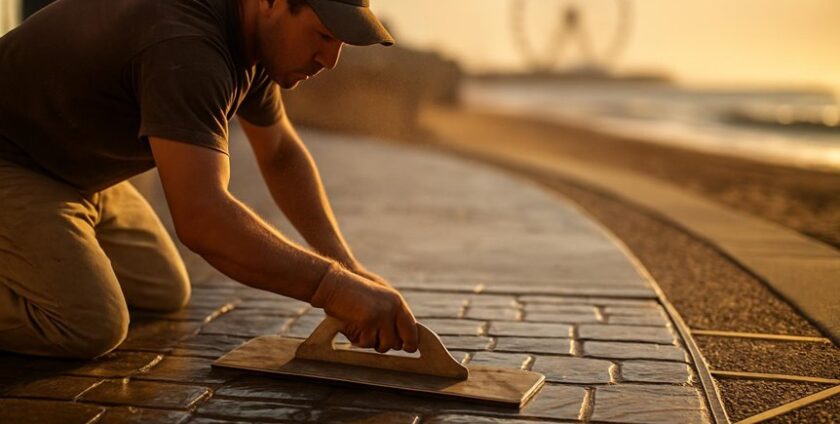
Decorative concrete offers a unique blend of durability and aesthetic appeal, making it a popular choice in Atlantic City, NJ. Understanding the various types and finishes available is vital for any project. Quality materials and professional installation can greatly enhance the longevity of the surface. Nevertheless, certain common mistakes can undermine these efforts. As the seasons change, specific considerations must be factored into planning. The next steps in this process are important for ideal results.
Understanding Decorative Concrete Types
Decorative concrete encompasses a range of techniques and finishes that enhance the aesthetic appeal of concrete surfaces.
Among these, stamped concrete replicates natural materials like stone and brick, while polished concrete offers a sleek, reflective finish.
Stained concrete utilizes colors to enrich the surface, and acid staining creates unique, variegated effects.
Overlay systems provide a fresh look over existing concrete, while exposed aggregate reveals the stone within the mix.
Integrally colored concrete incorporates pigments throughout, and concrete engraving allows for intricate designs.
Decorative borders and textural finishes further personalize spaces, offering endless possibilities for creativity in concrete applications.
Benefits of Decorative Concrete
The advantages of decorative concrete extend beyond mere aesthetics, offering practicality and durability alongside visual appeal.
Various decorative concrete applications, such as stamped, stained, and polished finishes, enhance outdoor and indoor spaces while providing a long-lasting solution. This material is not only cost-effective but also requires minimal maintenance, making it a wise choice for homeowners and businesses alike.
Additionally, decorative concrete contributes to environmental benefits by utilizing recycled materials and reducing waste during installation. Its energy-efficient properties further promote sustainability, making it an ideal choice for those seeking to balance beauty with eco-friendliness in their construction projects. Moreover, advanced self-leveling polished overlays transform uneven surfaces and provide a seamless, high-performance flooring solution.
Choosing the Right Finish for Your Project
Selecting the appropriate finish for a concrete project is vital to achieving the desired aesthetic and functional outcomes. Various finish types, such as polished, stamped, and brushed, offer distinct texture options that can enhance visual appeal.
Additionally, sheen levels range from matte to high gloss, influencing both appearance and maintenance requirements. It is important to reflect on environmental factors, including exposure to moisture and UV light, which can affect the longevity and performance of the finish. Moreover, considering the use of epoxy resins can significantly improve the durability and chemical resistance of your concrete surface.
Color Options and Their Impact
Color choices in decorative concrete greatly influence the total aesthetic and ambiance of a space.
Selecting the right palette can enhance design cohesion, while understanding color psychology allows for the creation of environments that evoke specific emotions.
Additionally, staying informed about seasonal color trends can guarantee that projects remain relevant and appealing throughout the year.
Choosing the Right Palette
Selecting an appropriate color scheme is essential for achieving visual harmony and enhancing outdoor spaces. Professionals recommend employing effective color selection strategies, such as considering the environment and existing structures. Palette combination tips include pairing neutral shades with bold accents, creating contrast while maintaining balance. Additionally, understanding how light affects color can greatly influence the final appearance. Incorporating sustainable materials in your decorative concrete can further enhance its aesthetic appeal while promoting environmental responsibility.
Color Psychology Effects
The impact of color on human emotions and perceptions plays a significant role in the design of decorative concrete in Atlantic City.
Understanding color associations can enhance the aesthetic appeal and emotional responses of spaces. Different colors evoke distinct feelings and can influence the general atmosphere of an area.
- Blue: Promotes calmness and tranquility.
- Red: Stimulates energy and excitement.
- Green: Evokes feelings of health and renewal.
- Yellow: Inspires happiness and optimism.
- Gray: Conveys professionalism and sophistication.
Seasonal Color Trends
Seasonal color trends greatly influence the aesthetics of decorative concrete, reflecting the changing moods and preferences associated with each time of year.
Designers often utilize seasonal palettes to create spaces that resonate with the environment. For instance, warm earth tones may dominate in autumn, while cool blues and greens can evoke a revitalizing spring atmosphere.
These color shifts not only enhance visual appeal but also impact the perceived temperature and ambiance of outdoor areas. Understanding these trends allows homeowners and professionals to select appropriate hues that harmonize with seasonal changes, ensuring that decorative concrete installations remain timeless and relevant.
The Importance of Quality Materials
The quality of materials used in decorative concrete serves an essential function in determining both durability and aesthetic appeal. High-quality ingredients guarantee that the finished product can withstand environmental stressors while maintaining its visual integrity over time. Additionally, superior materials offer a wider range of aesthetic options, allowing for greater creativity in design. Using high-quality aggregates can significantly enhance the overall performance of the concrete, ensuring a long-lasting and visually appealing result.
Material Durability Factors
When considering decorative concrete in Atlantic City, NJ, the choice of materials is vital in determining the long-term durability and performance of the installation. Quality materials contribute markedly to various durability factors, ensuring the concrete withstands environmental challenges.
- Weather resistance to protect against elements
- Material composition that enhances wear resistance
- Moisture absorption rates affecting longevity expectations
- Surface hardness for better resilience against scratches
- UV stability to prevent fading over time
Additionally, understanding thermal expansion and freeze-thaw cycles is essential for maintaining the integrity of decorative concrete throughout its lifespan. The application of industrial-grade densifiers can significantly increase concrete hardness and extend the floor’s lifespan.
Aesthetic Versatility Options
Quality materials not only impact durability but also greatly influence the aesthetic versatility of decorative concrete in Atlantic City, NJ.
High-quality components enable a range of finishes, such as stamped patterns that mimic natural stone, and exposed aggregate that highlights beautiful stone fragments. Techniques like acid staining provide rich color variations, while polished finishes deliver a sleek, modern look.
Overlay techniques can rejuvenate existing surfaces, and decorative borders add sophistication. Additionally, colored sealers enhance and protect these finishes, allowing for endless texture variations that cater to diverse design preferences, ensuring that each project meets specific aesthetic desires. Moreover, using high-performance applications can significantly improve the overall quality and longevity of decorative concrete installations.
Surface Preparation Techniques
Surface preparation is an essential step in achieving a successful decorative concrete finish in Atlantic City, NJ. Proper surface cleaning methods and thorough substrate assessment are critical to guarantee adhesion and longevity of decorative overlays.
Key techniques include:
- Removing debris and contaminants
- Grinding or shot blasting for surface profiling
- Conducting moisture testing to prevent issues
- Inspecting for cracks and imperfections
- Applying appropriate primers or sealers
Implementing these techniques lays a solid foundation for decorative concrete applications, ultimately enhancing both aesthetics and durability.
A meticulous approach to surface preparation can greatly impact the overall result of the project.
Installation Process Explained
The installation process for decorative concrete in Atlantic City, NJ, requires careful planning and execution to achieve ideal results.
Initially, selecting appropriate installation techniques is essential, including methods such as stamping, staining, or overlaying. Proper surface preparation guarantees adhesion and durability, while consideration of environmental factors can influence curing times.
Following the application, attention to detail in achieving the desired surface finishes—such as polished, textured, or colored surfaces—enhances aesthetic appeal.
Skilled professionals are recommended to navigate complexities, ensuring that the finished product not only meets visual expectations but also withstands the region’s weather conditions effectively.
Maintenance Tips for Longevity
Regular maintenance is essential for ensuring the longevity of decorative concrete in Atlantic City, NJ.
Employing effective cleaning techniques and appropriate sealing products will protect and enhance the surface.
To maintain decorative concrete effectively, consider the following tips:
- Clean surfaces regularly with mild detergents and soft brushes.
- Use a pressure washer for stubborn stains, avoiding overly high pressure.
- Apply sealing products every few years to prevent moisture penetration.
- Avoid using de-icing salts during winter to prevent surface damage.
- Inspect the concrete periodically for cracks or discoloration and address issues promptly.
These practices will help preserve the beauty and durability of decorative concrete.
Common Mistakes to Avoid
Neglecting proper installation techniques can lead to significant issues with decorative concrete in Atlantic City, NJ.
Common mistakes often stem from inadequate project planning, resulting in overlooked details that compromise quality.
Material selection is critical; using subpar materials can affect durability and aesthetics.
Surface preparation is another area where errors frequently occur, as improper cleaning or curing can weaken the structure.
Additionally, color matching discrepancies can detract from the complete design.
Installation errors, such as uneven pouring, can cause long-term problems, while maintenance oversights and cost miscalculations further complicate the project.
Avoiding these pitfalls guarantees a successful decorative concrete endeavor, especially when utilizing superior durability solutions like polished concrete overlays.
Seasonal Considerations in Atlantic City
Seasonal changes in Atlantic City markedly impact decorative concrete projects, influencing both installation and maintenance practices.
The area’s seasonal weather patterns and local events necessitate careful planning to guarantee ideal results.
- Winter freezes can compromise curing processes, requiring protective measures.
- Spring rains may necessitate timely sealing to prevent moisture damage.
- Summer heat can accelerate drying, affecting finish quality.
- Fall leaves and debris require regular cleaning to maintain aesthetics.
- Local events often dictate project timelines, as high-traffic periods may limit access.
Understanding these factors is essential for successful decorative concrete projects in Atlantic City’s unique environment.
Hiring a Professional vs. DIY
When considering decorative concrete projects, individuals must evaluate their skill level, as this can greatly impact the quality of the finished work.
Cost considerations also play an essential role, as hiring a professional may entail higher upfront expenses but could save money in the long run by avoiding costly mistakes.
Additionally, the time investment required for a DIY approach can be substantial, affecting total project timelines and personal schedules.
Skill Level Assessment
Choosing between hiring a professional or tackling decorative concrete projects as a DIY endeavor requires a careful assessment of skill levels and project complexity.
Homeowners must evaluate their experience with concrete, tools, and design techniques to guarantee a successful outcome.
- Familiarity with concrete mixing and pouring
- Ability to execute intricate designs and patterns
- Understanding of curing and sealing processes
- Access to specialized tools and equipment
- Time commitment for project completion
An accurate skill level assessment will guide individuals toward the most suitable option, ensuring that the end result meets aesthetic and functional expectations. Additionally, understanding moisture management is crucial for the longevity of decorative concrete installations.
Cost Considerations
Evaluating the financial implications of decorative concrete projects is essential for homeowners considering whether to hire a professional or undertake the work themselves.
A detailed cost breakdown reveals that hiring experts often incurs higher initial expenses but guarantees quality and longevity. Conversely, DIY projects may save money upfront, yet they can lead to unforeseen costs if mistakes occur.
Homeowners must also consider project financing options, as professional services might offer payment plans that facilitate budgeting.
Ultimately, the decision should align with one’s budget, desired outcome, and willingness to invest time and effort into the project.
Time Investment Factors
Time investment is essential in deciding between hiring a professional and undertaking a DIY decorative concrete project. Evaluating time commitment and project timeline can greatly influence the outcome.
Professionals typically offer efficiency and expertise, while DIY efforts may require extensive research and practice.
- Professionals can complete projects quickly due to experience.
- DIY projects may extend timelines due to skill acquisition.
- Professionals guarantee high-quality results with fewer mistakes.
- DIY may lead to unforeseen delays or complications.
- Time spent on planning, preparation, and execution varies greatly between options.
Understanding these factors helps homeowners make informed decisions regarding their decorative concrete endeavors.
Budgeting for Your Decorative Concrete Project
While planning a decorative concrete project, establishing a clear budget is essential for ensuring a successful outcome.
Effective budget allocation involves identifying all potential costs, including materials, labor, and any necessary permits. Additionally, project financing options should be explored, such as loans or payment plans, to enhance affordability.
Homeowners must also factor in unexpected expenses that may arise during the project, which can impact the entire budget. By prioritizing these financial considerations, individuals can make informed decisions, ensuring that their decorative concrete project aligns with both aesthetic desires and financial capabilities. Furthermore, considering sustainable management of construction materials can lead to cost-saving opportunities through recycling and reuse initiatives.
Proper budgeting ultimately leads to satisfactory results and minimized stress.
Frequently Asked Questions
How Long Does Decorative Concrete Typically Last?
Decorative concrete typically lasts 20 to 30 years, depending on factors like installation quality and environmental conditions. Regular maintenance tips, including sealing and cleaning, can greatly enhance the decorative concrete lifespan and preserve its appearance.
Can Decorative Concrete Be Repaired if Damaged?
Yes, decorative concrete can be repaired using various repair techniques. Surface restoration methods, such as patching or resurfacing, effectively address damage, ensuring the integrity and aesthetic appeal of the concrete remains intact for years.
What Are the Best Sealers for Decorative Concrete?
The best sealers for decorative concrete include acrylic, epoxy, and polyurethane types. Each requires specific application techniques, such as spraying or rolling, to guarantee proper adhesion and durability, ultimately enhancing the surface’s longevity and appearance.
Is Decorative Concrete Slippery When Wet?
Decorative concrete can be slippery when wet, depending on its surface texture. Higher slip resistance can be achieved through specific finishes and treatments, enhancing safety while maintaining aesthetic appeal in various environments. Proper maintenance is essential.
How Does Weather Affect Decorative Concrete Installation?
Weather greatly influences decorative concrete installation, as temperature fluctuations can affect curing times and strength. Additionally, high humidity levels may lead to moisture-related issues, making careful monitoring essential for ideal results during the installation process.
Conclusion
In summary, investing in decorative concrete in Atlantic City, NJ, requires careful consideration of materials, finishes, and professional expertise. By understanding the various types, benefits, and potential pitfalls, homeowners can enhance their outdoor spaces while ensuring durability. Seasonal weather impacts must be factored into project planning, and regular maintenance is essential for longevity. Ultimately, the right approach will yield stunning results that raise the aesthetic appeal and value of any property.
- By: Francis Burnet
- Tags: Atlantic City, decorative concrete, expert tips
- Category: Stamped & Decorative Concrete
- 0 comment