Industrial floor coatings are essential for maintaining functionality and safety in facilities in Camden, NJ. Selecting the right type is important, as is ensuring proper surface preparation. Various options, such as epoxy and polyurethane, offer distinct advantages. Understanding these factors can prevent costly mistakes. Additionally, identifying a reliable contractor is key for a successful application. The following sections will explore these considerations and guide facility managers toward ideal flooring solutions.
Understanding Different Types of Industrial Floor Coatings
Industrial floor coatings serve as a critical component in maintaining the durability and functionality of various commercial and manufacturing environments.
Among the most common types are polyurethane coatings and acrylic coatings.
Polyurethane coatings are known for their exceptional chemical resistance and durability, making them ideal for high-traffic areas and environments exposed to harsh substances.
In contrast, acrylic coatings offer quick application and excellent UV resistance, suitable for indoor and outdoor use.
Understanding these options allows facility managers to select the appropriate coating that meets specific operational needs, ensuring longevity and safety in their workspaces. Additionally, many industrial settings benefit from epoxy floor systems, which provide seamless finishes and enhanced durability.
Factors to Consider When Choosing Floor Coatings
When selecting industrial floor coatings, several critical factors must be considered to guarantee peak performance.
Surface preparation requirements, the impact of environmental conditions, and coating durability are essential elements that influence the longevity and effectiveness of the flooring solution.
Additionally, mechanical concrete polishing can significantly enhance the surface texture and appearance, contributing to overall performance and aesthetic appeal.
A thorough assessment of these factors will aid in making informed decisions tailored to specific industrial needs.
Surface Preparation Requirements
Proper surface preparation is essential for ensuring the longevity and effectiveness of floor coatings in industrial settings. This process begins with thorough substrate evaluation methods to identify the condition and type of flooring material.
Subsequently, employing effective surface cleaning techniques is vital to remove contaminants, such as oils, dirt, and old coatings, that may hinder adhesion. Additionally, it is important to address any surface imperfections, including cracks or unevenness, to create a suitable base for the coating.
Environmental Conditions Impact
Environmental conditions play an essential role in the selection of floor coatings for industrial applications.
Moisture control is vital, as excessive moisture can undermine adhesion and lead to premature failure. Additionally, temperature fluctuations must be considered, as they can affect the curing process and the overall performance of the coating.
Humidity effects are significant, particularly in environments with high humidity, which can impact drying times and longevity.
Lastly, UV exposure is a key factor for outdoor applications, as it can degrade certain coatings, necessitating the use of UV-resistant materials to guarantee durability and effectiveness in varying environmental conditions. Moreover, understanding moisture management is crucial for ensuring that the selected coatings perform optimally in different climates.
Coating Durability Factors
Selecting the right industrial floor coating involves careful consideration of several durability factors that can significantly influence performance and lifespan.
Key among these is coating thickness, which directly affects the coating’s ability to withstand mechanical stress and impacts. Thicker coatings generally provide enhanced wear resistance, making them suitable for high-traffic areas.
Additionally, the material composition plays a crucial role; epoxy and polyurethane coatings are often favored for their superior durability. The use of epoxy resins can greatly enhance the mechanical properties and chemical resistance of floor coatings.
It’s important to assess specific operational demands, including exposure to chemicals and temperature fluctuations, to guarantee the selected coating will maintain its integrity over time and deliver peak performance.
Benefits of Epoxy Coatings for Industrial Spaces
Epoxy coatings offer significant advantages for industrial spaces, primarily due to their exceptional durability and longevity. Their inherent chemical resistance properties make them ideal for environments exposed to harsh substances, while the aesthetic versatility options allow for customization to suit various operational needs. These benefits contribute to improved safety, maintenance efficiency, and general functionality in industrial settings. Additionally, the use of resinous poured flooring systems can further enhance the performance of epoxy coatings by providing seamless and hygienic surfaces.
Durability and Longevity
While many flooring options may falter under the demands of industrial environments, epoxy coatings stand out for their exceptional durability and longevity.
Designed to withstand heavy traffic, impacts, and abrasion, epoxy enhances floor performance considerably compared to traditional materials.
The robust nature of epoxy guarantees a long coating lifespan, which minimizes the need for frequent replacements and maintenance.
This durability not only protects the underlying substrate but also contributes to a safer working environment by reducing slip hazards.
Ultimately, investing in epoxy coatings results in long-term cost savings and improved efficiency for industrial spaces in Camden, NJ. Additionally, specialized formulation for chemical resistance helps ensure the flooring can withstand harsh industrial conditions.
Chemical Resistance Properties
Given the harsh conditions often present in industrial settings, the chemical resistance properties of epoxy coatings play an essential role in their effectiveness.
These coatings undergo rigorous chemical resistance testing to ascertain their ability to withstand various corrosive substances, including acids, solvents, and oils. Such evaluations are critical for coating performance evaluation, ensuring that the selected epoxy can endure the specific challenges of an industrial environment. Additionally, the use of alternative materials in epoxy formulations can enhance their durability and sustainability, further contributing to their performance in demanding applications.
Aesthetic Versatility Options
Aesthetic versatility is a significant advantage of epoxy coatings in industrial spaces, allowing facilities to tailor their flooring to specific design preferences and operational needs.
With a wide array of color options, businesses can create visually appealing environments that enhance brand identity and improve workplace morale.
The design flexibility of epoxy coatings accommodates various patterns and textures, enabling companies to distinguish different areas within their facilities.
Additionally, these coatings can be customized to meet safety requirements, such as slip resistance, without sacrificing aesthetic appeal.
In general, epoxy coatings offer both functional and visual benefits essential for modern industrial environments. Furthermore, multi-layer resinous flooring provides a robust solution that ensures long-lasting durability while meeting diverse operational specifications.
Polyurethane vs. Epoxy: Which Is Right for You?
When determining whether polyurethane or epoxy is the best choice for industrial floor coatings, one must consider various factors such as durability, chemical resistance, and maintenance requirements.
Polyurethane advantages include superior flexibility, excellent abrasion resistance, and UV stability, making it ideal for environments exposed to sunlight.
In contrast, epoxy disadvantages often involve limited flexibility, which can lead to cracking under extreme conditions. Additionally, epoxy may require more frequent maintenance due to wear over time.
Ultimately, the choice between polyurethane and epoxy hinges on the specific needs of the facility, including environmental conditions and expected traffic levels. Understanding chemical resistance is critical when selecting the most appropriate coating for your industrial flooring needs.
The Importance of Surface Preparation
Surface preparation serves as the foundation for successful industrial floor coating applications. Properly preparing the surface guarantees ideal adhesion and longevity of the coating.
Key surface cleanliness techniques and moisture testing methods are essential in this process. Neglecting these steps can lead to costly failures.
Consider the following:
- Assess surface integrity: Identify cracks and imperfections.
- Clean thoroughly: Remove contaminants and debris.
- Conduct moisture tests: Verify levels are suitable for coating.
- Select appropriate cleaning methods: Tailor techniques to specific surfaces.
Investing time in preparation translates to enhanced performance and durability, ultimately safeguarding the facility’s investment. Additionally, understanding the importance of prevention in construction can help minimize potential issues related to surface preparation and coating failures.
Application Techniques for Optimal Results
Proper surface preparation sets the stage for effective application techniques, which play a vital role in achieving ideal results in industrial floor coatings.
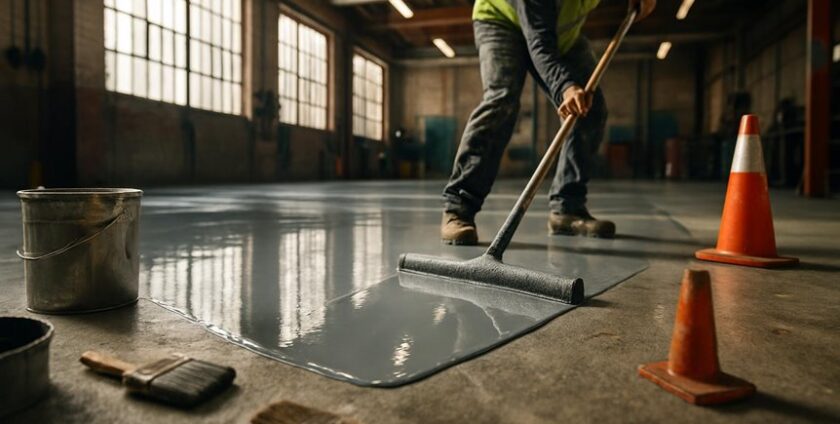
Various application methods, such as roller, brush, or spray, can be employed depending on the project requirements. For optimum techniques, attention to detail is essential; guaranteeing even coverage and avoiding pooling is important.
Properly mixing the coating material enhances adhesion and durability. Additionally, maintaining consistent temperature and humidity levels during application can greatly influence the final outcome. Utilizing experienced professionals familiar with these methods assures that the application process meets industry standards and expectations for longevity and performance. Moreover, incorporating multi-layer resinous flooring can significantly enhance the durability and aesthetic appeal of your industrial floors.
Safety Considerations During Installation
Although safety may sometimes be overlooked during installation, it remains a critical component in the application of industrial floor coatings.
Adhering to proper installation procedures guarantees not only quality results but also the well-being of workers.
Essential safety measures include:
- Wearing appropriate safety gear, such as gloves and goggles.
- Ensuring proper ventilation to avoid inhaling harmful fumes.
- Keeping work areas clean to prevent slips and falls.
- Following manufacturer guidelines to avoid accidents.
Additionally, implementing a construction checklist can help track safety measures and ensure compliance with protocols.
Maintenance Tips for Longevity
To guarantee the longevity of industrial floor coatings, regular maintenance practices are essential. Implementing routine inspections allows for the early detection of wear, damage, or contamination, which can greatly extend the life of the coating.
Facility managers should look for signs of peeling, cracking, or discoloration during these inspections. Additionally, developing effective repair strategies is critical; minor issues should be addressed promptly to prevent escalation.
Regular cleaning with appropriate products will also help maintain the floor’s integrity. By prioritizing these maintenance practices, businesses can guarantee their industrial floor coatings remain durable and effective for years to come. Furthermore, following maintenance and cleaning recommendations can provide tailored strategies to enhance the floor’s performance.
Cost Considerations for Floor Coating Projects
When planning floor coating projects, several cost considerations must be addressed to guarantee a successful investment.
Key factors include the selection of materials, which can greatly influence total expenses, as well as labor costs associated with the application process.
Additionally, an analysis of ongoing maintenance costs is essential to understand the long-term financial implications of the chosen coating solution. Furthermore, understanding the subfloor structure is crucial as it can impact the durability and performance of the floor coating.
Material Selection Impact
Selecting the right materials for industrial floor coatings greatly influences the total cost of a project.
Factors affecting this selection include:
- Material Compatibility: Ensuring the chosen materials interact well can prevent costly failures.
- Coating Performance: Higher-performing coatings may reduce maintenance expenses over time.
- Durability: Investing in durable materials can lead to long-term savings by minimizing replacements.
- Environmental Considerations: Eco-friendly options may have higher upfront costs but can yield savings through regulatory compliance.
Additionally, considering recycling C&D materials can further enhance sustainability and potentially reduce costs associated with disposal and procurement.
Understanding these elements helps stakeholders make informed decisions, balancing initial costs with the potential for long-term benefits.
Labor Expenses Overview
Labor expenses represent a significant portion of the total costs associated with industrial floor coating projects. A comprehensive labor cost breakdown is crucial for effective project budgeting.
This breakdown typically includes wages, benefits, and overhead for skilled laborers, site managers, and support staff. Additionally, factors such as project complexity and floor preparation requirements can influence labor costs.
Understanding these components allows facility managers to allocate resources more effectively and anticipate potential overruns. By accurately evaluating labor expenses, organizations can guarantee a smoother execution of their floor coating projects, ultimately enhancing both efficiency and financial outcomes.
Maintenance Cost Analysis
Although often overlooked, maintenance costs are a critical aspect in the long-term success of industrial floor coating projects. A thorough cost benefit analysis reveals that initial savings can be overshadowed by ongoing expenses.
Key factors to evaluate include:
- Frequency of repairs
- Type of cleaning products needed
- Labor costs associated with maintenance
- Potential downtime due to repairs
Additionally, understanding the benefits of rubber flooring systems can help in making an informed decision about the durability and maintenance needs of your industrial floors.
Environmental Impact of Floor Coatings
How do industrial floor coatings influence environmental sustainability? The choice of coatings greatly impacts sustainability practices within industrial settings.
Utilizing eco-friendly materials reduces harmful emissions and minimizes environmental degradation. These coatings often feature low volatile organic compounds (VOCs), further promoting air quality and worker safety.
By selecting sustainable options, businesses can enhance their operational efficiency while aligning with environmental regulations. Additionally, durable floor coatings extend the lifespan of surfaces, reducing the need for frequent replacements and conserving resources.
Ultimately, integrating eco-conscious floor coating solutions supports a greener future and demonstrates a commitment to responsible manufacturing practices. Moreover, adhering to sustainability measures can help companies stay competitive in the evolving market landscape.
Common Mistakes to Avoid
When selecting industrial floor coatings, companies often overlook critical factors that can lead to costly mistakes. Recognizing these common application errors is essential for ideal results.
Key mistakes to avoid include:
- Improper surface preparation – Neglecting to clean and repair surfaces can lead to adhesion failures.
- Ignoring environmental conditions – Failing to account for temperature and humidity can compromise the coating’s performance.
- Using the wrong coating type – Selecting inappropriate materials may result in premature wear.
- Overlooking safety protocols – Not adhering to safety guidelines can create hazardous work environments.
Additionally, moisture vapor transmission rate (MVTR) should be considered, as it can significantly affect the performance of industrial floor coatings in humid conditions.
Being aware of these pitfalls can save time and expenses while ensuring durability.
Finding a Professional Contractor in Camden NJ
Finding a qualified contractor in Camden, NJ, can greatly influence the success of an industrial floor coating project.
It is essential to evaluate contractor qualifications, including experience, certifications, and past project portfolios. A reputable contractor should provide clear estimates and adhere to realistic project timelines, ensuring minimal disruption to business operations.
Additionally, seeking references and reading online reviews can offer insights into the contractor’s reliability and quality of work. Furthermore, a contractor with experience in tile and stone installation can enhance the project by ensuring proper substrate preparation and waterproofing.
Frequently Asked Questions
How Long Does It Take for Industrial Floor Coatings to Cure?
The cure time for industrial floor coatings typically ranges from 24 to 72 hours, depending on the material and environmental conditions. Understanding the curing process is essential for achieving ideal performance and longevity of the flooring.
Can I Install Floor Coatings Myself or Hire a Professional?
Individuals can choose between DIY vs. Professional installation of floor coatings. Cost considerations include material savings for DIY, but professionals guarantee quality and durability, potentially preventing future expenses from improper application, thereby warranting careful evaluation.
What Is the Average Lifespan of Industrial Floor Coatings?
The average lifespan of industrial floor coatings typically ranges from 5 to 20 years, depending on coating durability and maintenance frequency. Regular upkeep greatly influences longevity, ensuring ideal performance and minimizing the need for premature replacement.
Are There Specific Coatings for High-Temperature Environments?
Yes, specific coatings designed for high-temperature environments feature enhanced thermal resistance and heat insulation properties. These coatings protect surfaces from heat damage, ensuring durability and safety in industrial settings where heightened temperatures are prevalent.
What Are the Best Cleaning Products for Coated Floors?
The best cleaning products for coated floors include eco-friendly cleaners that effectively remove dirt without damaging surfaces. Regular maintenance tips suggest using pH-neutral solutions to prolong the lifespan of the coatings and maintain their appearance.
Conclusion
To summarize, selecting the right industrial floor coating in Camden, NJ, requires careful consideration of various factors, including coating types, surface preparation, and professional application. By understanding the benefits of epoxy and polyurethane, while avoiding common pitfalls, facility managers can guarantee a durable and effective flooring solution. Regular maintenance and inspections further enhance longevity, making the choice of an experienced contractor essential for a successful project. Prioritizing these elements will lead to peak performance and satisfaction in industrial spaces.
- By: Francis Burnet
- Tags: Camden NJ, floor maintenance, industrial coatings
- Category: Industrial & Warehouse Floors
- 0 comment