
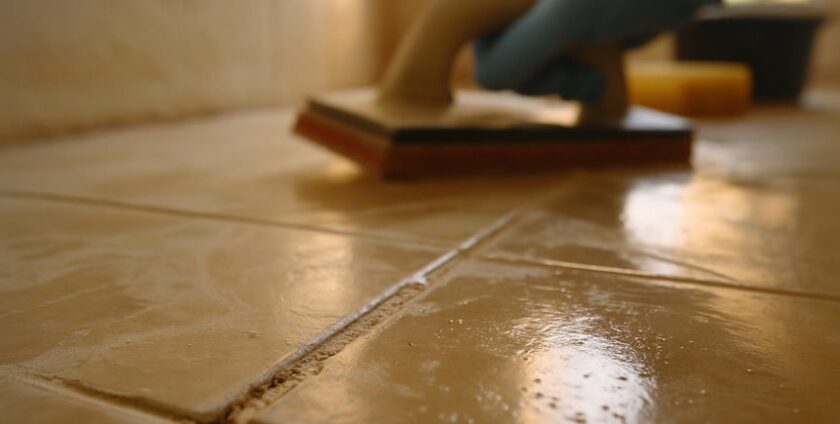
Tile grouting is a critical step in any tiling project, yet many individuals overlook common mistakes that can compromise the installation’s quality. From selecting the wrong grout type to neglecting manufacturer instructions, these oversights can lead to costly repairs down the line. Understanding the essential precautions and techniques can greatly enhance the durability and appearance of the grout. Addressing these issues can make a substantial difference in the outcome of any tiling endeavor.
Using the Wrong Grout Type
When selecting grout for tile installations, many homeowners and DIY enthusiasts overlook the importance of using the correct type. Grout selection is vital for ensuring long-lasting results, as different materials offer varying levels of durability and flexibility.
For instance, cement-based grouts are often suitable for ceramic tiles, while epoxy grouts provide superior resistance to stains and moisture, making them ideal for environments like kitchens and bathrooms.
Understanding grout compatibility with the tile material is essential to prevent issues such as cracking or discoloration. By choosing the right type, individuals can enhance the aesthetics and lifespan of their tile projects. Additionally, improper grout selection can lead to installation complications, which may necessitate costly repairs or replacements.
Incorrect Mixing Ratios
Incorrect mixing ratios can greatly affect the outcome of tile grouting projects. Proper measurement techniques and consistency in mixing are essential to achieving the desired strength and durability of the grout. Failure to adhere to these principles can lead to poor performance and premature deterioration of the tiled surface. Additionally, understanding proper installation techniques is crucial to ensure that the grout adheres effectively and maintains its integrity over time.
Proper Measurement Techniques
Accurate measurement is essential in tile grouting, as improper mixing ratios can lead to a host of problems, including uneven consistency and compromised adhesion.
Employing reliable measurement methods is critical for achieving accurate calculations of grout components. Using measuring cups or digital scales guarantees the correct proportions of water and grout powder, thereby preventing common mistakes.
Additionally, it is important to consult the manufacturer’s guidelines for specific mixing ratios. By prioritizing precise measurements, tile installers can enhance the durability and effectiveness of their grouting, ensuring a professional finish and long-lasting results in their projects.
Consistency in Mixing
Precision in measurement sets the foundation for effective grout application, but the process does not end there. Achieving the correct grout texture hinges on proper mixing techniques and ratios.
Incorrect mixing can lead to inconsistencies, resulting in grout that is either too runny or too thick. These disparities not only affect the appearance but can also impede the grout’s adhesion and performance.
It is vital to follow manufacturer guidelines and utilize accurate measuring tools to guarantee that water-to-grout ratios are maintained. A consistent mixture promotes durability and enhances the overall aesthetic of the tiled surface, preventing future complications.
Impact on Durability
When grout is mixed with improper ratios, the long-term durability of tiled surfaces can be greatly compromised. Incorrect proportions can lead to weak bonds, increased susceptibility to cracking, and reduced water resistance.
This not only affects grout longevity but also raises the need for frequent repairs and maintenance. To guarantee peak performance, it is essential to follow manufacturer guidelines for mixing ratios. Additionally, adhering to international certification standards can ensure that the materials used in the grouting process meet the necessary quality and safety requirements.
Implementing maintenance tips, such as regular cleaning and resealing, can further enhance the lifespan of grout. Ultimately, attention to proper mixing and upkeep will yield a more resilient tiled surface, minimizing future issues.
Neglecting to Read Manufacturer Instructions
Neglecting to read manufacturer instructions can lead to significant errors in tile grouting projects.
These instructions provide essential guidance on mixing ratios, application techniques, and drying times, which are vital for achieving ideal results.
Misinterpretations of these guidelines often result in improper adhesion, uneven surfaces, and costly repairs.
Importance of Instructions
Although many home improvement enthusiasts may feel confident in their tile grouting skills, overlooking the manufacturer’s instructions can lead to significant problems.
Adhering to these guidelines guarantees correct grout consistency and ideal application techniques, preventing costly mistakes.
Consider the potential consequences of neglecting instructions:
- Inconsistent grout appearance
- Increased risk of cracking
- Compromised adhesion leading to loose tiles
- Difficulty in achieving desired finish
- Unforeseen repairs and expenses
Common Misinterpretations Explained
Many DIY enthusiasts misinterpret the importance of manufacturer instructions, often assuming that their general knowledge of tile grouting is sufficient.
This oversight can lead to mistakes in grout color selection and application techniques. Each manufacturer provides specific guidelines that guarantee ideal results, including mixing ratios, drying times, and recommended tools.
Ignoring these details may result in uneven grout, discoloration, or compromised adhesion. By carefully reading and following the instructions, enthusiasts can avoid common pitfalls and achieve a professional finish.
Understanding that every product has unique requirements is essential for a successful tile grouting project.
Skipping the Pre-Grouting Preparation
Pre-grouting preparation is an essential step that is often overlooked, leading to suboptimal results in tile installation. A thorough preparation checklist can guarantee a successful grouting process.
Key considerations include:
- Guaranteeing surface cleanliness to avoid contamination
- Checking for moisture on the substrate
- Confirming proper tile alignment
- Reviewing grout compatibility with tile material
- Gathering necessary tools and materials
Neglecting these steps can result in uneven grout lines, compromised adhesion, and premature failure.
Failing to Clean Tile Surface Properly
How essential is it to guarantee the tile surface is clean before grouting? Proper cleaning techniques are important to eliminate surface contamination, which can lead to poor adhesion and compromised grout integrity.
Dust, dirt, or residues left on the tiles can prevent grout from properly bonding, ultimately resulting in unsightly cracks and a weakened structure.
To effectively prepare the surface, one should utilize appropriate cleaning methods, such as sweeping, vacuuming, and mopping with suitable cleaners.
Ensuring a pristine tile surface not only enhances the general appearance but also extends the longevity of the grout, making it a significant step in the grouting process.
Overfilling or Underfilling Grout Lines
After guaranteeing the tile surface is meticulously cleaned, attention shifts to the proper filling of grout lines.
Overfilling or underfilling these lines can severely impact grout line aesthetics and lead to costly repairs. Employing effective grout application techniques is essential for achieving a professional finish.
Common pitfalls include:
- Uneven grout surfaces that disrupt visual harmony
- Cracks forming due to excessive pressure or inadequate filling
- Difficulty in cleaning grout lines if they are too shallow
- Compromised durability of the grout
- Increased susceptibility to mold and mildew
Addressing these issues guarantees a polished, long-lasting tiled surface that meets aesthetic expectations.
Rushing the Grouting Process
Many DIY enthusiasts underestimate the importance of pacing regarding the grouting process, leading to a range of potential issues.
Rushing through grouting can result in uneven application, improper adhesion, and unsightly finishes. Effective time management and thorough project planning are essential to guarantee that the grout is applied correctly.
Allocating sufficient time allows for careful mixing, application, and cleanup, minimizing the risk of mistakes. A well-paced approach not only enhances the overall appearance of the tiled surface but also extends its durability.
Ultimately, taking the time to grout properly pays off in both aesthetics and functionality.
Not Using the Right Tools
Using the right tools is essential for achieving a professional-quality grout finish. Improper tool selection can lead to uneven application and subpar results.
Additionally, neglecting tool maintenance can exacerbate these issues, causing frustration and wasted effort.
To guarantee success, consider the following:
- Quality grout float for even distribution
- Grout bags for precision in tight spaces
- Sponge for smooth surface finishing
- Mixing tools for consistent grout texture
- Clean-up tools to avoid residue
Ignoring Temperature and Humidity Factors
Inadequate attention to temperature and humidity can greatly impact grout performance and total project success.
The temperature effects on grout can lead to rapid drying, causing cracks and poor adhesion. Conversely, high humidity impact can result in excessive moisture, disrupting the curing process and weakening the bond.
Ideal conditions typically range between 50°F and 90°F, with humidity levels below 70%. Ignoring these factors can result in a less durable grout, leading to costly repairs.
Professionals should always check environmental conditions before application to guarantee peak performance and longevity of the grout, thereby safeguarding their investment in tile work.
Inadequate Curing Time
When grout is not given sufficient time to cure, it can lead to significant structural issues and aesthetic problems in tile installations. Proper curing techniques and ideal drying conditions are essential for ensuring longevity.
Failing to allow adequate time can result in:
- Cracked grout lines
- Deterioration of tile adhesion
- Uneven appearance
- Increased moisture infiltration
- Greater susceptibility to stains
Homeowners and contractors alike must prioritize curing time, as rushing this process can compromise the integrity of the entire installation.
Emphasizing patience and attention to detail during curing can save considerable time, effort, and expense in the long run.
Forgetting to Seal Grout Lines
Many homeowners overlook the essential step of sealing grout lines after installation, a mistake that can lead to a host of problems. Unsealed grout is porous, making it susceptible to stains, mildew, and damage from moisture.
To avoid these issues, it is vital to employ proper grout sealing techniques. Homeowners should choose high-quality sealing products, such as penetrating sealers or topical sealers, based on their specific needs.
Applying the sealant evenly and allowing it to cure properly guarantees long-lasting protection. By prioritizing grout sealing, homeowners can maintain the integrity and appearance of their tiled surfaces for years to come.
Poor Maintenance After Installation
After tile installation, maintaining grout lines is essential to guarantee longevity and aesthetic appeal.
Regular cleaning practices can prevent dirt and mildew buildup, while timely sealing of grout lines protects against moisture infiltration.
Neglecting these maintenance tasks can lead to costly repairs and a diminished appearance of the tiled surface.
Regular Cleaning Practices
Regular cleaning practices are essential for maintaining the integrity and appearance of tile grout. Poor maintenance can lead to unsightly stains and deterioration.
Establishing a routine cleaning frequency guarantees longevity and aesthetic appeal. Key aspects to reflect on include:
- Removing dirt and debris promptly
- Using appropriate cleaning solutions
- Avoiding harsh chemicals that can degrade grout
- Regularly inspecting for mildew or mold
- Scheduling deep cleanings as necessary
Sealing Grout Lines
Sealing grout lines is a crucial step that often gets overlooked during tile installation, leading to significant issues over time.
Effective grout sealing techniques can prevent moisture penetration, reducing the risk of mold and mildew growth. Additionally, properly sealed grout enhances the overall appearance of tiled surfaces and extends their lifespan.
The grout sealing benefits are manifold, including easier cleaning and maintenance, which ultimately saves time and money. Homeowners should prioritize this essential process to guarantee their tile installations remain durable and aesthetically pleasing.
Regular sealing, in conjunction with good cleaning practices, is key to maintaining grout integrity.
Frequently Asked Questions
How Do I Choose the Right Color for Grout?
To choose the right grout color, one should consider color matching with tile shades for a seamless look or opt for grout contrast to highlight patterns. Evaluating lighting and surrounding decor also aids in making an informed decision.
Can I Grout Over Existing Grout?
Yes, one can grout over existing grout. Nevertheless, employing grout removal techniques first can enhance adhesion and longevity. The benefits of regrouting include improved appearance and added protection against moisture and stains.
What Is the Best Time to Grout?
The best time to grout is when ambient temperatures are moderate, ideally between 60°F to 80°F, ensuring favorable drying conditions. Proper grout timing enhances adhesion and prevents issues associated with rapid drying or humidity.
How Can I Fix Cracked Grout Lines?
To fix cracked grout lines, one can employ various repair techniques such as removing the damaged grout, cleaning the area thoroughly, and applying a suitable grout mix to restore a seamless and durable finish.
Is It Necessary to Seal Epoxy Grout?
Sealing epoxy grout is not necessary due to its inherent resistance to stains and moisture. Nevertheless, sealing techniques can enhance longevity, providing additional protection against wear, thereby amplifying the epoxy grout benefits in high-traffic areas.
Conclusion
To summarize, avoiding common mistakes in tile grouting is vital for achieving a durable and aesthetically pleasing finish. By selecting the appropriate grout type, adhering to precise mixing ratios, and following manufacturer instructions, one can guarantee a successful installation. Proper surface preparation, attention to environmental factors, and allowing adequate curing time are significant steps that should not be overlooked. Additionally, implementing a routine maintenance schedule will safeguard grout integrity, prolonging the lifespan of the tile installation.
- By: Francis Burnet
- Tags: DIY tips, home improvement, tile grouting
- Category: Custom Floor Finishes
- 0 comment