
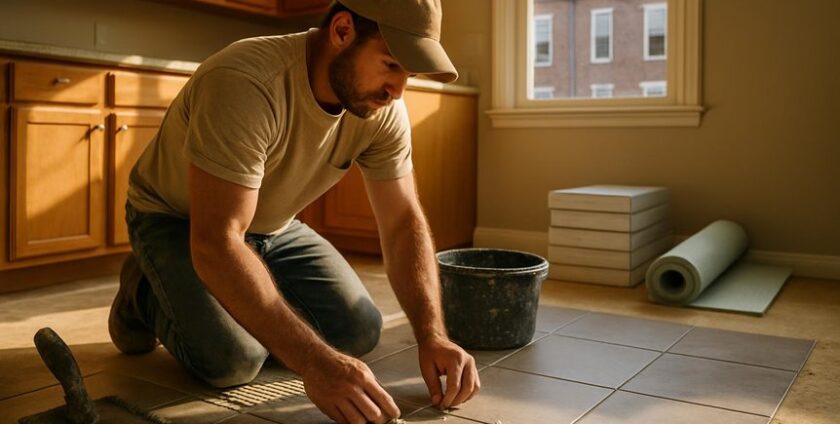
Tile installation in Reading, PA, requires careful planning and execution for successful outcomes. Homeowners must consider various tile types, materials, and their specific needs. Proper subfloor preparation is essential to guarantee a solid foundation. Additionally, understanding the necessary tools and techniques can greatly influence the installation process. As one undertakes this project, several key factors will determine the efficiency and longevity of the finished product. What are the next steps to tackle this endeavor effectively?
Understanding Different Types of Tiles
Tiles serve as both functional and aesthetic elements in various spaces, and understanding the different types available is essential for any installation project. Among the choices, glossy and matte finishes stand out for their distinct characteristics.
Glossy tiles reflect light, creating a bright and spacious appearance, making them suitable for modern designs. In contrast, matte tiles offer a softer, more subdued look, ideal for rustic or contemporary settings.
Additionally, textured finishes can enhance grip and add depth to a surface, making them popular in areas prone to moisture. Each type serves unique purposes, influencing both the design and practicality of a space. Furthermore, the choice of ceramic materials can significantly impact the tile’s durability and maintenance requirements.
Selecting the Right Tile for Your Space
Choosing the right tile for a space involves careful consideration of various factors, including the material options available, the size and shape that best fit the area, and the desired color and pattern.
Each of these elements serves an essential function in defining the complete aesthetic and functionality of the installation. Making informed decisions in these areas can greatly enhance the visual appeal and durability of the tiled surface. Additionally, understanding the unique requirements of different materials—such as natural stone installation—can further guide your selection process for optimal results.
Tile Material Options
An assortment of tile materials are available, each offering distinct advantages and aesthetics suitable for different environments.
Ceramic tiles are versatile and cost-effective, while porcelain tiles provide durability and water resistance.
Glass tiles add a modern touch with their reflective qualities.
Natural stone offers unique beauty but requires maintenance.
Vinyl tiles are affordable and easy to install, perfect for DIY enthusiasts.
Mosaic tiles create intricate designs, while eco-friendly tiles appeal to environmentally conscious consumers.
Textured tiles enhance grip, and large format tiles can make spaces feel more expansive.
Lastly, patterned tiles offer diverse design possibilities to complement any decor. Additionally, selecting the right tile can significantly impact flooring durability and overall functionality in a space.
Size and Shape Considerations
When selecting the right tile for a space, considering the size and shape can greatly impact both the aesthetic and practicality of the installation.
Tile dimensions should complement the room proportions to create a harmonious look. Here are three key considerations:
- Room Size: Larger tiles can make small spaces appear more open, while smaller tiles can add detail in expansive areas.
- Shape: Rectangular tiles can elongate a room, while square tiles offer a balanced feel.
- Layout: Diagonal or staggered layouts can add visual interest and affect perceived space.
Additionally, adhering to industry standards such as those set by the Tile Council of North America can ensure optimal tile performance and longevity. Choosing wisely guarantees a functional and visually appealing environment.
Color and Pattern Choices
After considering size and shape, the next step in selecting tile for a space involves the thoughtful evaluation of color and pattern choices.
Understanding current tile trends is essential for making informed decisions. Homeowners should consider how color schemes will complement existing decor, impacting the overall atmosphere. Neutral tones can create a serene environment, while bold colors can add vibrancy.
Patterns, such as geometric or floral designs, can enhance visual interest but should be chosen carefully to avoid overwhelming a space. Ultimately, the right combination of color and pattern can transform an area, reflecting personal style while maintaining functionality.
Preparing Your Subfloor for Tile Installation
Before installing tile, it is essential to assess the condition of the subfloor to guarantee it can support the weight and structure of the tiles. This includes checking for any damage, moisture issues, or unevenness that could affect the final installation.
Once assessed, the subfloor must be thoroughly cleaned and leveled, providing a stable foundation for the tile.
Assess Subfloor Condition
Evaluating the condition of the subfloor is essential for a successful tile installation. A thorough subfloor inspection helps identify any issues that may affect the tiles’ longevity.
The following steps should be taken:
- Check for Damage: Look for cracks, warping, or rot that may compromise stability.
- Conduct Moisture Testing: Assess moisture levels to prevent future issues such as mold or tile adhesion failure.
- Guarantee Levelness: Verify that the subfloor is level to avoid uneven tile surfaces.
Addressing these factors will guarantee a solid foundation for the tile, leading to a durable and aesthetically pleasing installation.
Clean and Level Surface
A pristine surface is essential for the successful installation of tile, as it guarantees proper adhesion and a flawless finish. To achieve this, effective surface preparation techniques are critical.
First, the subfloor must be thoroughly cleaned to remove dust, debris, and any previous adhesive residue. Next, leveling methods should be employed to ascertain the surface is even, utilizing self-leveling compound where necessary.
Any dips or imperfections must be addressed to prevent future cracking or shifting of tiles. By meticulously preparing the surface, installers can enhance the longevity and aesthetic appeal of the tiled area, assuring a professional result. Additionally, employing multi-layer resinous flooring can provide an extra layer of durability and style to the finished project.
Essential Tools and Materials for Tile Projects
Successful tile installation requires a well-equipped toolkit and quality materials. The right tile installation tools and essential materials guarantee an efficient and effective project.
Essential items include:
- Tile Cutter: A reliable cutter is vital for making precise cuts on tiles.
- Trowel: A notched trowel helps evenly spread adhesive, assuring proper tile adhesion.
- Level: A level ensures that tiles are installed evenly, preventing future issues.
Having these tools and materials readily available allows for a smoother installation process, leading to a professional finish that enhances any space, whether residential or commercial. Additionally, using quality tile installation services can further ensure a durable and stylish outcome.
Measuring and Planning Your Tile Layout
Before laying tiles, careful measuring and planning are essential to achieve a professional and aesthetically pleasing result. Accurate measurements guarantee that tiles fit properly within the space, avoiding awkward cuts and misalignments.
Employing effective tile layout strategies, such as starting from the center or using grid lines, can enhance the overall appearance. Various measuring techniques, including using a tape measure or a laser level, help establish precise dimensions.
Additionally, creating a scale drawing of the area can aid in visualizing the layout before installation. Proper planning ultimately contributes to a successful tile project that meets both functional and design objectives.
Techniques for Cutting Tiles Accurately
Proper measurement and layout set the foundation for tile installation, but cutting tiles accurately is equally important to achieve a seamless finish.
Employing effective tile cutting techniques guarantees a professional appearance. Utilizing precision cutting tools enhances accuracy and reduces waste. Here are three essential methods:
- Tile Cutter: This manual tool scores tiles for clean breaks, ideal for straight cuts.
- Wet Saw: A power tool that uses water to cool the blade, perfect for intricate designs and reducing dust.
- Snap Cutter: An efficient option for straight cuts, offering ease of use for various tile materials.
Mastering these techniques leads to superior results.
Applying Adhesive and Setting Tiles
In the process of tile installation, selecting the appropriate adhesive is vital for ensuring a strong bond between the tiles and the substrate.
Once the right adhesive is chosen, it must be applied evenly to prevent uneven surfaces and potential tile movement.
Finally, careful alignment and pressing of the tiles are essential for achieving a professional and aesthetically pleasing finish.
Selecting the Right Adhesive
How can one guarantee the longevity and effectiveness of a tile installation? Selecting the right adhesive is vital.
Different adhesive types exhibit varying adhesive properties, impacting the installation’s durability. Here are three key considerations:
- Substrate Compatibility: Confirm the adhesive is suitable for the tile and surface being used.
- Moisture Resistance: Choose an adhesive designed for wet areas if installing in bathrooms or kitchens.
- Setting Time: Consider the working time needed; some adhesives allow for adjustments, while others set quickly.
Applying Adhesive Evenly
Achieving an even application of adhesive is vital for a successful tile installation. Proper adhesive application guarantees that tiles bond effectively, preventing issues such as warping or uneven surfaces.
Different adhesive types, such as thin-set mortar or mastic, require specific techniques for best results. Using a notched trowel, the installer spreads the adhesive uniformly across the surface, creating ridges that enhance adhesion.
It is important to maintain consistent pressure while applying the adhesive, confirming that it fills any gaps. By focusing on these details, the installer sets a solid foundation for the tiles, promoting durability and longevity in the finished project.
Aligning and Pressing Tiles
Once the adhesive has been evenly applied, the next vital step involves aligning and pressing the tiles into place. Proper tile alignment techniques are essential for achieving a professional finish. The installer should carefully position each tile, guaranteeing they are straight and evenly spaced.
- Use spacers to maintain consistent gaps between tiles.
- Apply even pressure when pressing tiles to avoid air bubbles and secure full contact with the adhesive.
- Periodically check alignment with a level or straightedge to maintain accuracy throughout the installation process.
Grouting: Tips for a Professional Finish
Grouting is an essential step in tile installation that can greatly influence the complete appearance and durability of the finished surface.
Selecting the appropriate grout type—whether sanded or unsanded—depends on the width of the joints. Grout colors play a significant role in the overall look; lighter shades can create a clean, expansive feel, while darker hues may add drama and contrast.
Proper application involves using a rubber float to push grout into joints, ensuring even distribution. It is vital to clean excess grout promptly to avoid haze on tiles.
These tips can enhance the professional finish of any tiling project.
Sealing and Maintaining Your Tiles
After completing the grouting process, attention turns to sealing and maintaining tiles to guarantee their longevity and aesthetic appeal.
Proper tile maintenance is essential for preserving the investment made in flooring. The following sealing techniques can enhance durability:
- Choose the Right Sealer: Select a sealer suitable for the tile type, ensuring it provides adequate protection against stains and moisture.
- Apply Regularly: Depending on usage, reseal tiles every 1-3 years to maintain their protective barrier.
- Clean Gently: Use pH-neutral cleaners to avoid damaging the sealer, ensuring tiles remain visually appealing and functional over time.
Common Mistakes to Avoid During Installation
While undertaking tile installation, it is essential to be aware of common mistakes that can compromise the final outcome. Many individuals fall victim to tile installation errors such as improper surface preparation, which can lead to uneven tiles and adhesive failure.
Additionally, neglecting to account for expansion joints can result in cracked tiles over time. Another common pitfall is inadequate spacing between tiles, which affects the general aesthetic and alignment.
Finally, rushing through the curing process may reduce the durability of the installation. By recognizing these issues, installers can guarantee a more successful and lasting tile project.
Budgeting for Your Tile Project
When planning a tile installation project, establishing a clear budget is essential to avoid unexpected costs and guarantee a smooth process.
A detailed budget breakdown can help homeowners stay on track. Key components to evaluate include:
- Materials: Calculate the cost of tiles, grout, and adhesive.
- Labor: Determine if hiring a professional or opting for DIY will be more cost-effective.
- Contingency Fund: Set aside 10-15% of the total budget to cover unexpected expenses, such as damage or additional materials.
Hiring a Professional vs. DIY Installation
Deciding between hiring a professional or undertaking a DIY installation can greatly impact the outcome of a tile project. A cost comparison reveals that while DIY may seem budget-friendly, it often lacks the skill assessment necessary for complex installations.
Time investment is another vital factor, as professionals can expedite the process, especially with challenging layouts. Long term benefits may include warranties on workmanship, which DIYers typically forfeit.
Additionally, aesthetic impact and maintenance requirements may suffer if not executed properly. Ultimately, the choice hinges on individual capability and project complexity, emphasizing the importance of informed decision-making in tile installation. Furthermore, understanding common hazards in construction can help DIYers ensure a safer working environment during their tile installation projects.
Frequently Asked Questions
How Long Does a Typical Tile Installation Take?
Tile installation duration typically ranges from one to three days. Factors influencing the timeline include the project’s size, complexity, surface preparation, and the type of tile used, all of which can greatly affect completion time.
Can I Install Tiles Over Existing Flooring?
Yes, tiles can be installed over existing flooring if they are compatible. Proper flooring prep is essential, including ensuring the surface is clean, level, and structurally sound to support the new tile installation effectively.
What Is the Best Grout Color for My Tiles?
The best grout color complements the tile contrast. Lighter grout enhances vibrant tiles, while darker grout provides a bold statement. Consider the room’s lighting and general design to achieve a harmonious and visually appealing look.
Are There Specific Tiles Recommended for High-Moisture Areas?
For high-moisture areas, water-resistant tiles such as porcelain or ceramic are recommended. Additionally, moisture-proof options like vinyl or glass tiles provide excellent durability and protection against water damage, ensuring long-lasting performance in humid environments.
How Do I Repair Cracked Tiles After Installation?
To repair cracked tiles, one can utilize methods such as epoxy filling, replacing the tile, or applying a sealant. Each technique varies in complexity and effectiveness, depending on the extent of the damage to the cracked tile.
Conclusion
To sum up, a successful tile installation project in Reading, PA, hinges on careful planning and execution. By understanding tile types, preparing the subfloor, and utilizing the right tools, homeowners can achieve stunning results. Regular maintenance will guarantee the longevity of the tiles, while being mindful of common pitfalls can save time and resources. Whether opting for a DIY approach or hiring a professional, following these guidelines will lead to a beautiful and durable tiled space.
- By: Francis Burnet
- Tags: home improvement, Reading PA, tile installation
- Category: Custom Floor Finishes
- 0 comment