
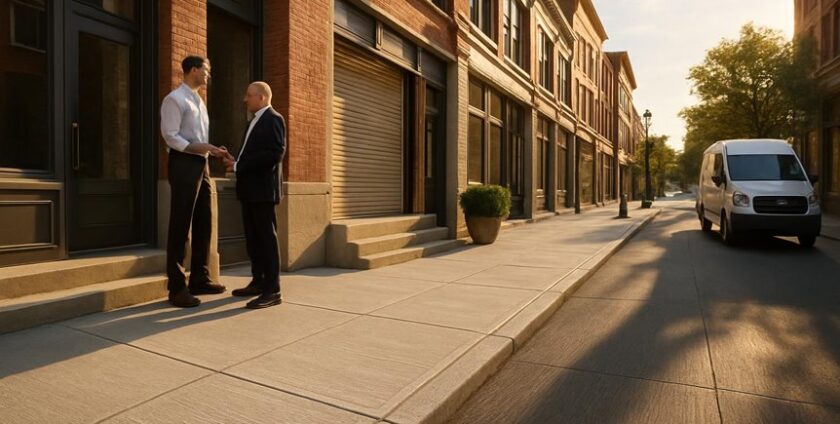
Businesses in Trenton, NJ, increasingly opt for concrete restoration as a strategic solution to enhance their properties. This approach not only boosts structural integrity but also improves visual appeal. By addressing wear and tear from environmental factors, companies can reduce long-term repair costs. Furthermore, the use of sustainable materials aligns with modern environmental goals. As the demand for efficient restoration techniques grows, it raises questions about the future of concrete restoration in commercial settings.
Understanding Concrete Restoration
Understanding concrete restoration is essential for maintaining the integrity and aesthetics of structures over time.
Various concrete deterioration factors, such as moisture, freeze-thaw cycles, and chemical exposure, can compromise structural integrity. To effectively address these issues, an overview of restoration techniques is vital.
Methods include surface repair, which involves patching cracks, and more extensive interventions like slab replacement. Additionally, protective coatings can enhance durability and extend lifespan. Incorporating recycled materials into restoration efforts can further improve sustainability and reduce environmental impact.
The Economic Advantages of Restoration
Concrete restoration presents several economic advantages that can greatly benefit property owners.
By serving as a cost-effective maintenance solution, it helps to enhance the general value of a property while extending the lifespan of existing materials.
This strategic approach not only preserves assets but also contributes to long-term financial savings. Additionally, it aligns with sustainable management practices by reducing the need for new materials and minimizing waste generation.
Cost-Effective Maintenance Solution
Restoration presents a cost-effective maintenance solution for property owners in Trenton, NJ, seeking to extend the lifespan of their concrete structures.
By opting for restoration over complete replacement, businesses can achieve significant cost savings while minimizing disruption.
Effective maintenance planning allows property owners to address issues proactively, reducing the risk of more extensive damage and future expenses.
This strategic approach guarantees that resources are allocated efficiently, extending the durability of concrete surfaces without incurring excessive costs.
Ultimately, restoration not only preserves structural integrity but also provides a sustainable financial strategy for maintaining valuable property investments in Trenton. Additionally, utilizing mechanical concrete polishing can enhance the aesthetic appeal and durability of restored surfaces.
Increased Property Value
Enhancing property value through strategic restoration efforts is a significant advantage for owners in Trenton, NJ.
Concrete restoration offers substantial property enhancement, allowing businesses to attract tenants and customers while increasing visual appeal. This improvement not only boosts marketability but also contributes to a higher investment return, making properties more competitive in the real estate market.
By addressing wear and tear, owners can prevent costly replacements and guarantee longevity, ultimately leading to increased profitability. Additionally, effective moisture management is crucial in ensuring the durability of restored concrete surfaces, safeguarding investments against potential damage.
As the local economy evolves, investing in concrete restoration stands out as a prudent choice for those looking to maximize their property value in Trenton.
Extended Lifespan of Materials
Investing in restoration techniques greatly extends the lifespan of various materials used in construction and infrastructure.
By employing advanced restoration methods, businesses in Trenton, NJ, can markedly enhance material performance, ensuring that structures remain resilient against wear and environmental factors.
This proactive approach not only reduces the need for frequent replacements but also leads to lower long-term maintenance costs.
Consequently, an extended product lifespan translates to improved financial efficiency and resource sustainability.
As companies prioritize restoration, they contribute to a more durable built environment, ultimately benefiting both their operations and the surrounding community. Additionally, utilizing sustainable flooring options can further enhance the longevity and environmental impact of restored structures.
Minimizing Downtime for Businesses
How can businesses in Trenton, NJ, effectively minimize downtime during concrete restoration projects? By implementing strategic planning and efficient execution, companies can enhance business continuity and operational efficiency.
- Schedule restorations during off-peak hours to limit disruption to daily operations.
- Utilize fast-curing materials that reduce the time needed for the restoration process.
- Engage experienced contractors who can guarantee a swift and effective restoration, minimizing delays.
Implementing a construction checklist can further streamline the restoration process, ensuring that all necessary steps are followed for efficiency.
These strategies not only keep businesses operational but also protect revenue streams, allowing them to maintain productivity while undergoing essential concrete improvements.
Enhancing Aesthetic Appeal
While many businesses focus primarily on functionality, the aesthetic appeal of concrete surfaces in Trenton, NJ, holds a crucial importance in creating inviting and professional environments.
Concrete restoration offers an opportunity to enhance this appeal through the application of colorful finishes and decorative overlays. These techniques not only improve the visual aspects of floors and walls but also allow businesses to express their brand identity. By investing in concrete restoration, companies can transform dull and worn surfaces into vibrant and attractive spaces, thereby fostering positive impressions among clients and customers. Ultimately, this contributes to a more engaging and aesthetically pleasing atmosphere. Additionally, specialized flooring solutions such as decorative epoxy flooring can provide unique aesthetic options that elevate the overall appearance of commercial spaces.
Environmental Benefits of Concrete Restoration
Concrete restoration not only enhances the aesthetic appeal of surfaces but also brings significant environmental benefits.
By employing sustainability practices, businesses can reduce waste and lower their carbon footprint. The use of eco-friendly materials in restoration processes further minimizes environmental impact, promoting a healthier ecosystem.
- Reduces the need for new materials, conserving natural resources.
- Decreases landfill waste by repurposing existing concrete structures.
- Lowers energy consumption compared to conventional construction methods.
Additionally, implementing waterproofing systems during restoration can further safeguard structures against moisture damage, extending their lifespan and reducing the need for future repairs.
These advantages make concrete restoration an attractive, responsible choice for businesses in Trenton, NJ, aligning with their commitment to environmental stewardship.
Durability and Longevity of Restored Surfaces
Restored surfaces can exhibit remarkable durability and longevity, often outlasting newly constructed alternatives. This enhanced surface resilience results from advanced restoration techniques that reinforce the material’s structural integrity.
Businesses in Trenton, NJ, recognize the longevity benefits of concrete restoration, as it provides a cost-effective solution over time by minimizing the need for frequent repairs. Restored surfaces can withstand varying environmental conditions, ensuring they remain functional and aesthetically pleasing for years. Additionally, these restoration practices align with ACI’s low-carbon concrete initiatives, promoting sustainability in construction.
Common Concrete Issues Addressed by Restoration
Addressing common concrete issues is essential for maintaining the integrity and safety of surfaces in both commercial and residential applications.
Concrete restoration effectively targets several prevalent problems, ensuring longevity and functionality.
- Cracking surfaces: Restorative techniques can repair fissures, preventing further deterioration.
- Water damage: Effective sealing and resurfacing methods mitigate moisture infiltration, reducing risk.
- Surface wear: Restoring worn-down areas enhances aesthetics and safety, promoting better traction. Additionally, utilizing self-leveling polished overlays can provide a seamless and durable solution for enhancing the overall visual appeal of spaces.
Comparison With Complete Replacement
When evaluating concrete restoration versus complete replacement, several key factors emerge, including cost-effectiveness, time efficiency, and environmental impact.
Restoration often presents a more budget-friendly option, requiring less financial investment compared to full replacement.
Additionally, the quicker turnaround time associated with restoration can greatly reduce disruptions, while also minimizing waste and promoting sustainability. Furthermore, utilizing specialized flooring installations can enhance facility performance and support long-term durability.
Cost-Effectiveness of Restoration
While many property owners may initially consider complete replacement as the only solution for damaged concrete, a thorough analysis often reveals that restoration can be considerably more cost-effective.
Effective restoration budgeting allows for significant savings and minimizes disruption.
- Restoration typically requires fewer materials, reducing total costs.
- Project planning for restoration often leads to quicker implementation, preserving cash flow.
- Long-term maintenance costs are generally lower with restored surfaces.
Additionally, utilizing resources from the Architect Center can enhance the restoration process by providing access to comprehensive design materials and specifications.
Time Efficiency Benefits
The time efficiency of concrete restoration presents a significant advantage over complete replacement, making it a compelling option for property owners.
Restoration projects typically require less downtime, allowing businesses to resume operations swiftly. Time-saving strategies, such as targeted repairs and resurfacing, minimize disruptions compared to the extensive timelines associated with full replacements.
Additionally, effective project scheduling enhances resource management, ensuring that work is completed promptly and efficiently. This approach not only accelerates the return to normalcy but also reduces labor costs, further solidifying concrete restoration as an excellent choice for those seeking to maintain their properties with minimal interruption. Implementing regular site inspections during the restoration process can further enhance safety and efficiency.
Environmental Impact Consideration
Although the environmental impact of concrete restoration is often less prominent in discussions compared to complete replacement, it is essential in sustainable construction practices.
Choosing restoration over replacement considerably reduces waste and resource consumption, aligning with eco-friendly initiatives.
- Minimizes the use of virgin materials, promoting the use of green materials.
- Decreases landfill contributions by extending the life of existing structures.
- Lowers carbon emissions associated with the production and transportation of new concrete.
These sustainable practices not only benefit businesses financially but also contribute to a healthier environment, making concrete restoration a responsible choice for Trenton NJ enterprises. Additionally, the integration of energy efficiency strategies in building renovations can further enhance the sustainability of restored concrete structures.
Innovations in Concrete Restoration Techniques
As advancements in technology continue to reshape the construction industry, innovations in concrete restoration techniques are becoming increasingly essential for maintaining infrastructure integrity.
Modern approaches now incorporate sustainable materials, reducing environmental impact while enhancing durability. Advanced technology, such as 3D printing and high-performance polymers, allows for more precise repairs and extends the lifespan of structures. Additionally, the use of smart sensors can monitor concrete health in real-time, enabling timely interventions. These innovations not only improve the efficiency of restoration processes but also guarantee that communities benefit from safer and more resilient infrastructure, ultimately fostering long-term economic growth. Moreover, the integration of 3D-printed prefabricated homes serves as a testament to how modern construction technologies can influence and enhance traditional practices in concrete restoration.
Case Studies of Successful Restoration Projects
Case studies of successful concrete restoration projects in Trenton, NJ, illustrate the effectiveness of innovative techniques and their long-term benefits.
These notable projects highlight the strategic approaches taken to address structural challenges while enhancing aesthetic appeal.
Notable Project Highlights
Successful concrete restoration projects in Trenton, NJ, exemplify the transformative power of expert craftsmanship and innovative techniques. Notable project highlights demonstrate the impact of meticulous planning and execution, contributing to restoration success across various sectors.
- A downtown plaza revitalization, enhancing aesthetics and safety.
- A historic building restoration, preserving architectural integrity while improving durability.
- An industrial site overhaul, optimizing functionality and extending the lifespan of concrete surfaces.
These project examples illustrate the effectiveness of concrete restoration, showcasing how businesses benefit from revitalized spaces that meet modern standards while honoring Trenton’s rich heritage.
Innovative Techniques Employed
While the challenges of concrete restoration can be significant, innovative techniques have emerged that not only address these issues but also enhance the collective quality and longevity of the projects.
Case studies illustrate the effective use of advanced materials, such as high-performance concrete and polymer-modified compounds, which improve durability and resistance to environmental factors.
Additionally, various surface treatments, including sealing and polishing, have been implemented to protect against moisture infiltration and wear.
These techniques not only restore structural integrity but also uplift aesthetic appeal, showcasing how modern approaches can transform aging concrete into resilient, attractive surfaces for businesses in Trenton, NJ. The use of polished concrete overlay is one such technique that has gained popularity for its exceptional light reflectivity and durability.
Long-Term Benefits Realized
The implementation of innovative techniques in concrete restoration has yielded significant long-term benefits, as evidenced by numerous case studies throughout Trenton, NJ.
These projects highlight how businesses have achieved remarkable results through effective restoration practices, ensuring long-term durability and economic sustainability.
- Enhanced structural integrity, reducing the need for frequent repairs.
- Improved aesthetic appeal, attracting more customers and clients.
- Cost savings over time, allowing for reinvestment in other business areas.
Additionally, projects like the Lindenwold Early Childhood Center demonstrate the effectiveness of specialized flooring solutions in high-traffic environments.
These outcomes underscore the importance of concrete restoration, presenting a compelling case for its adoption among Trenton’s business community.
Choosing the Right Restoration Contractor
How can one guarantee they select the most qualified restoration contractor for concrete projects in Trenton, NJ?
It is vital to assess contractor qualifications, including relevant experience, licensing, and insurance. Prospective clients should request references and review completed projects to confirm quality workmanship.
Additionally, evaluating a contractor’s ability to adhere to project timelines is imperative, as delays can impact business operations. Engaging in detailed discussions about project scope and expectations will further clarify capabilities.
Future Trends in Concrete Restoration for Businesses
What innovations are shaping the future of concrete restoration for businesses? As the industry evolves, emerging technologies and sustainable practices are at the forefront, revolutionizing how restoration is approached.
Businesses can enhance durability and reduce environmental impact through these advancements.
- Integration of smart sensors for real-time monitoring
- Use of eco-friendly materials that minimize carbon footprint
- Adoption of automated systems for efficient restoration processes
These trends not only optimize performance but also align with corporate sustainability goals, ensuring businesses in Trenton, NJ, can maintain their infrastructures while being responsible stewards of the environment.
Frequently Asked Questions
How Long Does the Concrete Restoration Process Typically Take?
The concrete restoration process typically ranges from a few days to several weeks, depending on project complexity. Understanding the restoration timeline and project duration is essential for effective planning and minimal disruption to operations.
What Types of Businesses Benefit Most From Concrete Restoration?
Retail spaces and industrial facilities considerably benefit from concrete restoration. These businesses often require durable, safe, and aesthetically pleasing surfaces to enhance functionality, attract customers, and maintain operational efficiency, making restoration a valuable investment for their longevity.
Are There Specific Permits Needed for Concrete Restoration Projects?
Concrete restoration projects typically require specific permit requirements, which vary by location. Adhering to local restoration regulations is essential for compliance, ensuring safety and quality in the restoration process, while minimizing potential legal complications.
How Often Should Concrete Surfaces Be Restored or Maintained?
Concrete surfaces should be restored or maintained every 3 to 5 years, depending on usage and environmental conditions. Regular maintenance frequency considerably enhances surface longevity, preventing deterioration and extending the lifespan of the concrete infrastructure.
Can Concrete Restoration Be Performed in Any Weather Conditions?
Concrete restoration can be performed in various weather conditions; nonetheless, ideal results are achieved under specific temperatures and humidity levels. Proper restoration techniques are essential to guarantee durability and effectiveness, regardless of external environmental factors.
Conclusion
To sum up, businesses in Trenton, NJ, recognize the multifaceted benefits of concrete restoration, which not only preserves property value but also enhances aesthetic appeal and supports sustainability efforts. By minimizing downtime and leveraging innovative techniques, these enterprises can achieve long-lasting results that contribute to both economic stability and environmental responsibility. As the demand for efficient and effective restoration solutions continues to grow, selecting a qualified contractor will be essential for maximizing the advantages of this crucial service.
- By: Francis Burnet
- Tags: business durability, concrete restoration, Trenton NJ
- Category: Surface Preparation & Grinding, Troubleshooting Common Flooring Issues
- 0 comment